Bringing Chaos to Canvas: Designing the Hand-Painted Fetus Poster
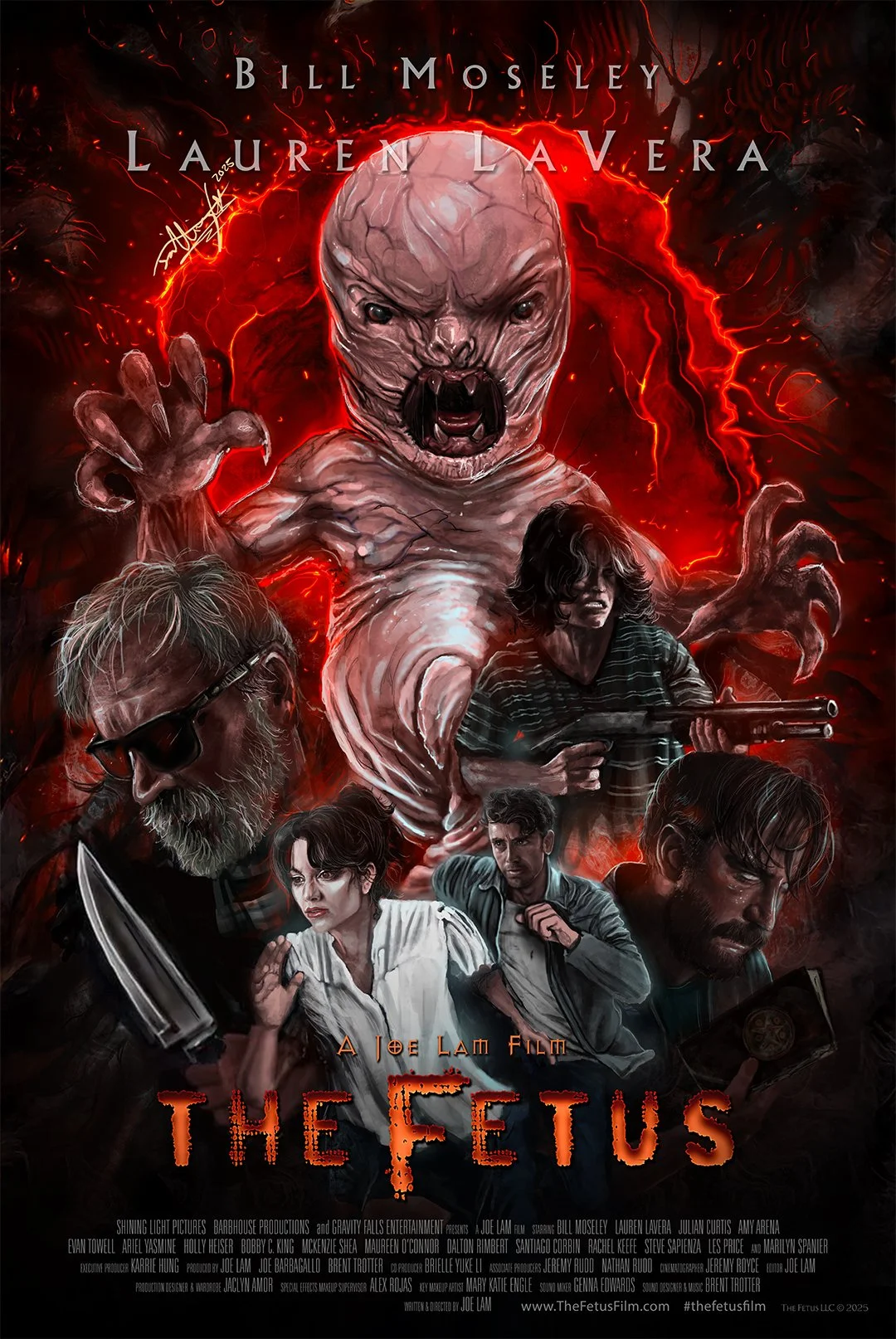
The Fetus Hand-Painted Poster featuring main cast members created by Toni Vingle (TVart).
By Joe Lam — Writer & Director
Published: December 6, 2025
When artist Toni Vingle was first approached to design the official poster for The Fetus, she was already familiar with the film and excited. “I was blown away,” she said. “I’ve never really seen something like that before.”
As a longtime horror fan, Toni immediately connected with the tone of the project: chaotic, frightening, but strangely fun. That blend of horror and dark comedy became the backbone of her approach, not only in terms of visual style but in how she infused personality into every character and brushstroke.
From Sketch to Scream
Toni’s creative process began with a rough sketch to determine layout, character positions, and background elements. Once approved, she progressed to line art, then blocked in base colors. “The fetus was the first part I really dove into with the detail,” she explained. “It’s the biggest—and the part I was most excited to draw.”
The evolution of the image, from loose gestures to fully rendered digital painting, was driven by layers of detail. Toni worked in Procreate using tools like the airbrush and Spectra paintbrush, which allowed her to build lifelike textures: “It just really helps make things look wet and fleshy and gross.”
Leaning into Horror
Despite The Fetus being a horror-comedy, the poster leaned heavily into horror. “The concept of a giant demon fetus is kind of darkly comedic in its own way,” Toni noted. “But visually, I definitely leaned more toward horror.”
Her goal was to create a piece that matched the intensity of the film, something that radiated danger, mystery, and energy.
To do this, she focused on expression, posture, and subtle cues. Maddox (Bill Moseley) looms with an intimidating presence. Alessa and Chris run in terror. Weapons are brandished. The fiery portal swirls behind them, not just as background, but as a character in itself.
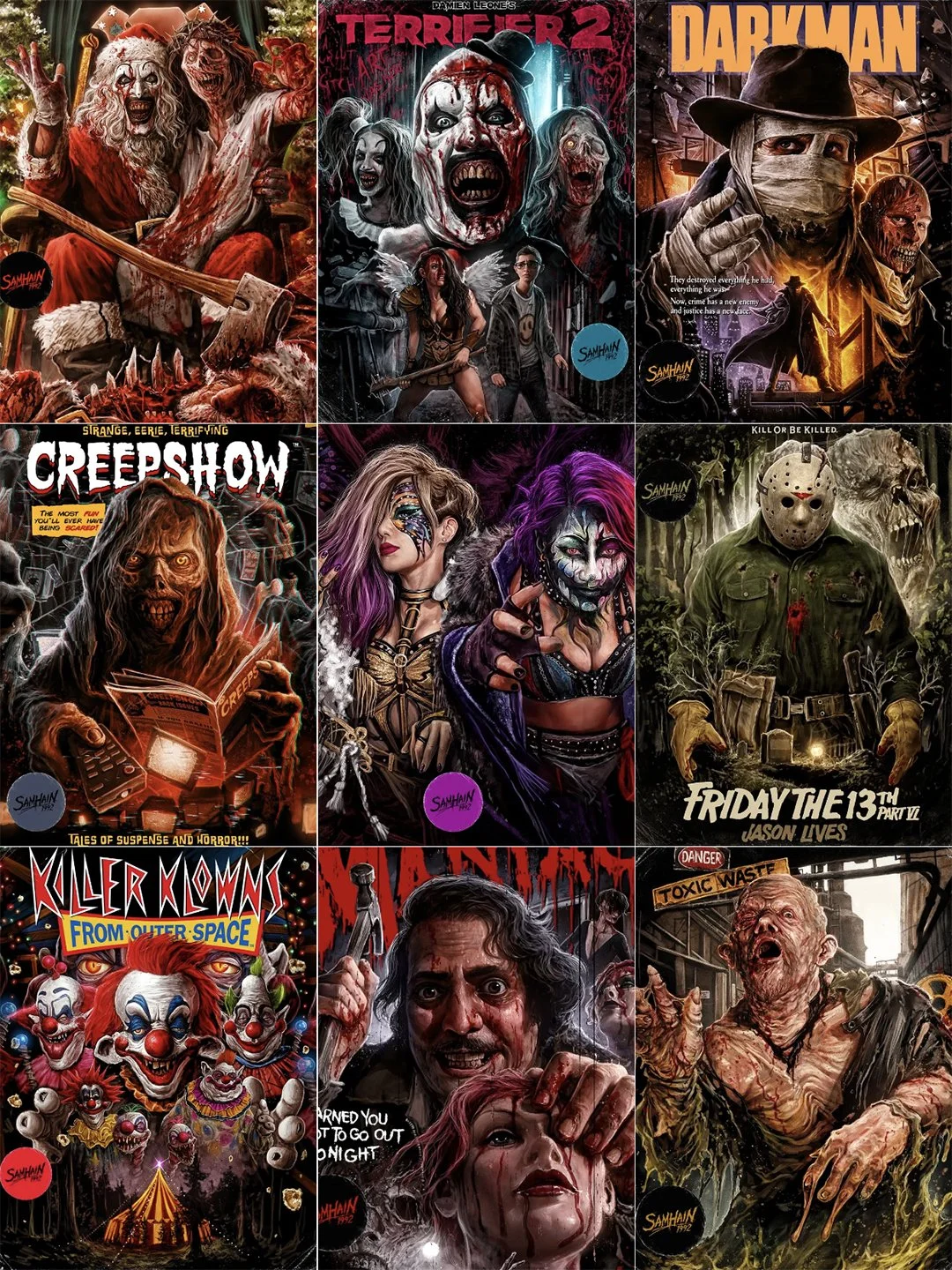
A collection of Sam Hain's artwork from his instagram page: @SamHain1992.
The Influence of Other Artists
Toni drew inspiration from horror artist Sam Hain (@SamHain1992), whose chaotic, character-packed compositions help define today’s indie horror aesthetic. “He kind of combines different characters from different movies… and makes them interact with the environment he draws behind them,” she said.
She wanted her Fetus poster to feel just as alive. “I tried to have that same kind of flow… to have the crazy background portal wrap around the characters, but also have them in front of it, like they’re running away from it.”
Symbolism, Silhouettes, and Subtext
Poster design is more than just character placement. It’s storytelling. “When you watch a movie, you get to experience how the characters act,” Toni said. “But in a drawing, they’re not moving or talking, so you have to show that in other ways.”
That meant giving each figure an emotional stance and symbolic object. Maddox clutches a knife. Chris wields a crowbar. These weren’t arbitrary props, they hint at the characters’ growth, agency, and stakes in the story. “By the end of the movie, they’re these badass characters you’re rooting for. So to show them holding weapons? It says they’re not just going to sit there and take it.”
Collaboration with the Director
Working with writer-director Joe Lam was a collaborative dream, Toni said. “He gave clear direction, Maddox here, Alessa running that way, but he was also open to ideas.”
Together, they debated everything from which version of Maddox should appear, to what each character should be holding. “This wasn’t just my drawing,” she emphasized. “This was our poster. That kind of open communication makes the whole process better.”
Poster Art as Part of the Filmmaking Process
Toni sees movie posters as artistic extensions of the film itself. “I didn’t come up with the movie,” she said, “but I get to contribute to its artistic vision. It’s amazing to see someone else’s creative project and then translate that into my own medium.”
Every detail on the poster, from the red glow around the portal to the fetal creature’s glistening flesh, carries intentional weight. “Even after you watch the movie, you’ll look back at the poster and say, ‘Oh, that was a reference to that scene!’”
The Goal: Excitement on Sight
When asked what she hopes fans will feel when they first see the poster, Toni didn’t hesitate: “The same excitement I felt when I got the commission.”
She poured that energy into the artwork—every line, every highlight, every fleck of terror—so horror fans would sense the madness inside The Fetus before the first frame even played. “It just taps the surface of how crazy the movie gets.”
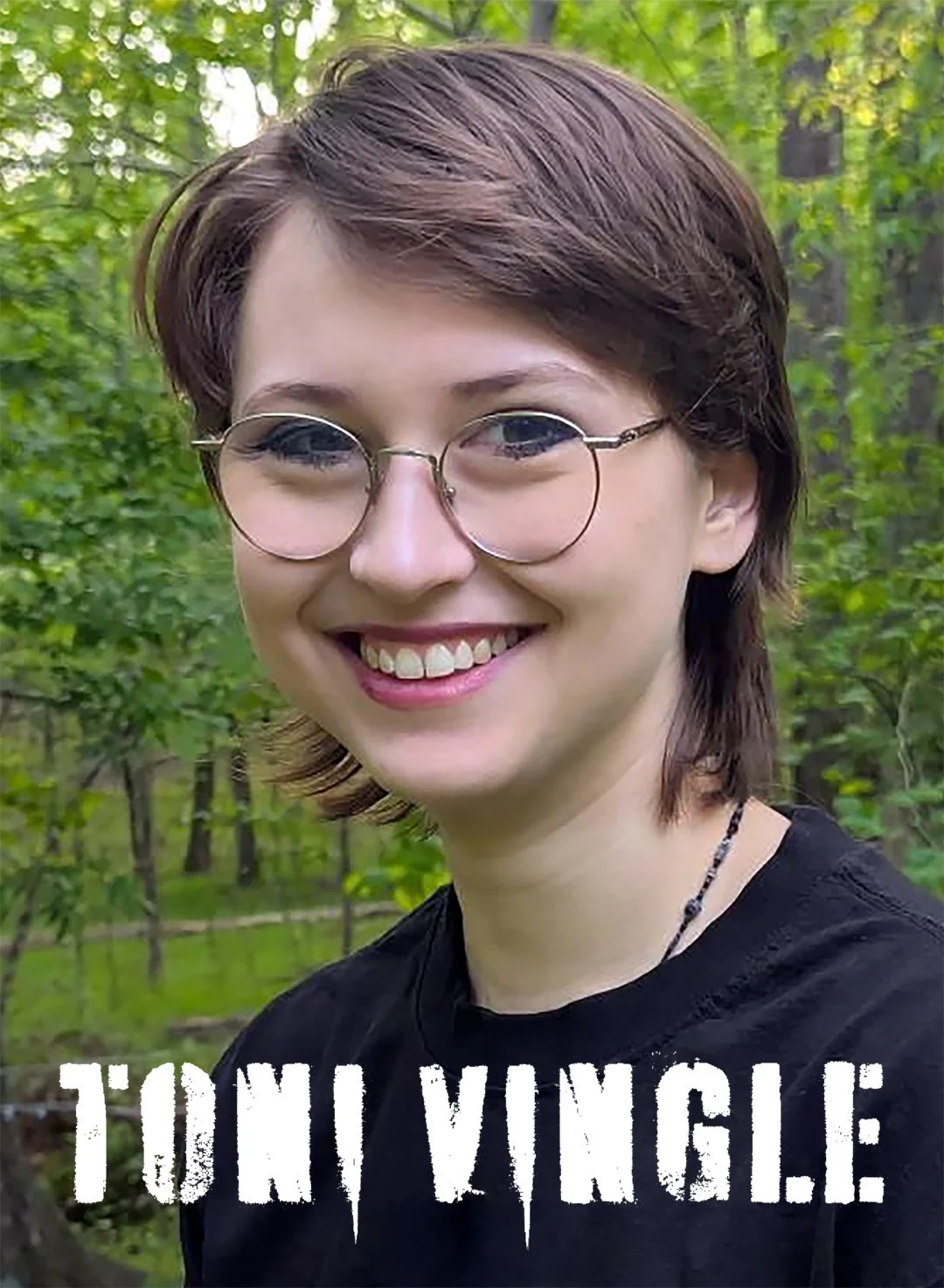
Toni Vingle Headshot
About Toni Vingle
Toni Vingle is a horror-focused illustrator and digital artist known for her bold, chaotic, and emotionally charged compositions. Drawing inspiration from cult genre creators and the surreal aesthetics of modern indie horror, her work blends atmosphere, character, and narrative into striking visual storytelling.
Toni created the hand-painted poster art for The Fetus, bringing the film’s raw intensity and creature-driven fear to life through her signature style. When she’s not crafting artwork for films and creators, she’s sketching new horrors, sharpening her craft, and sharing her process with her growing online community.
View more of Toni Vingle's work at:
https://www.instagram.com/tvart7
About the Author
Joe Lam is the writer-director of the indie horror-comedy film The Fetus and author of the filmmaking book Delivering The Fetus. He specializes in practical effects-driven storytelling and indie film production.
Haven't seen The Fetus yet?

Ready to witness the horror? Watch The Fetus starring Lauren LaVera now.
See how it all comes together on screen, watch The Fetus.
Get Your FREE Copy of Delivering The Fetus!
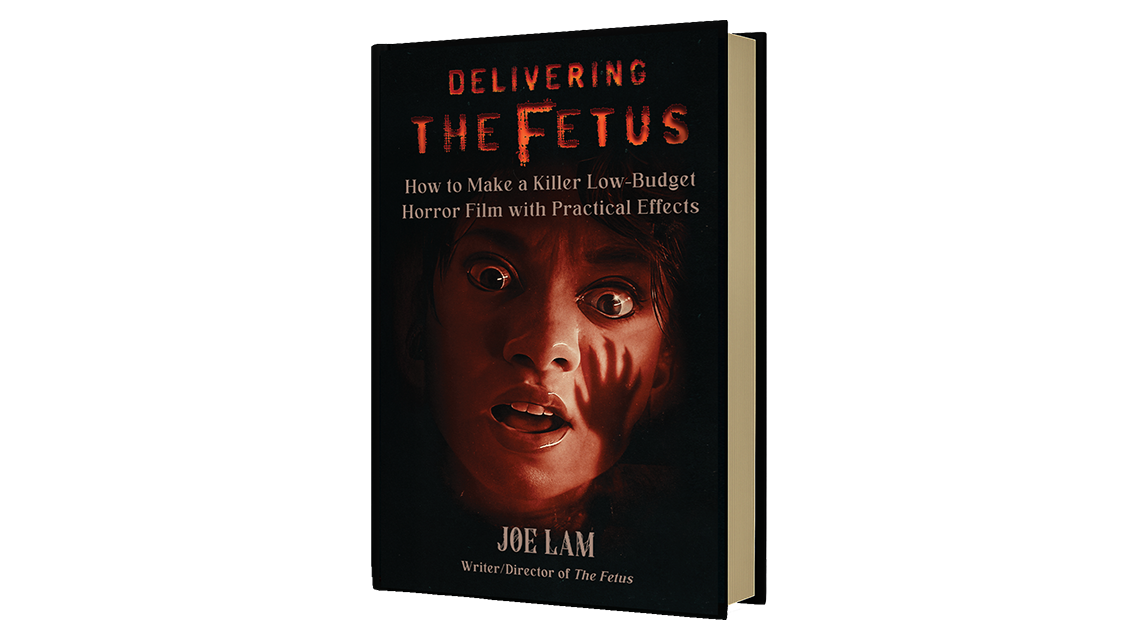
Free filmmaking book by Joe Lam, writer/director of The Fetus, offering step-by-step insights into low-budget horror and practical effects.
Go behind the scenes of The Fetus and dive into the practical FX, creature builds, and filmmaking chaos that brought this monster to life. Essential reading for indie filmmakers and horror fans who want a deeper look into the nightmare behind the movie.