Horror in the Home: Location, Isolation & Domestic Terror in The Fetus
By Joe Lam — Writer & Director
Published: December 20, 2025
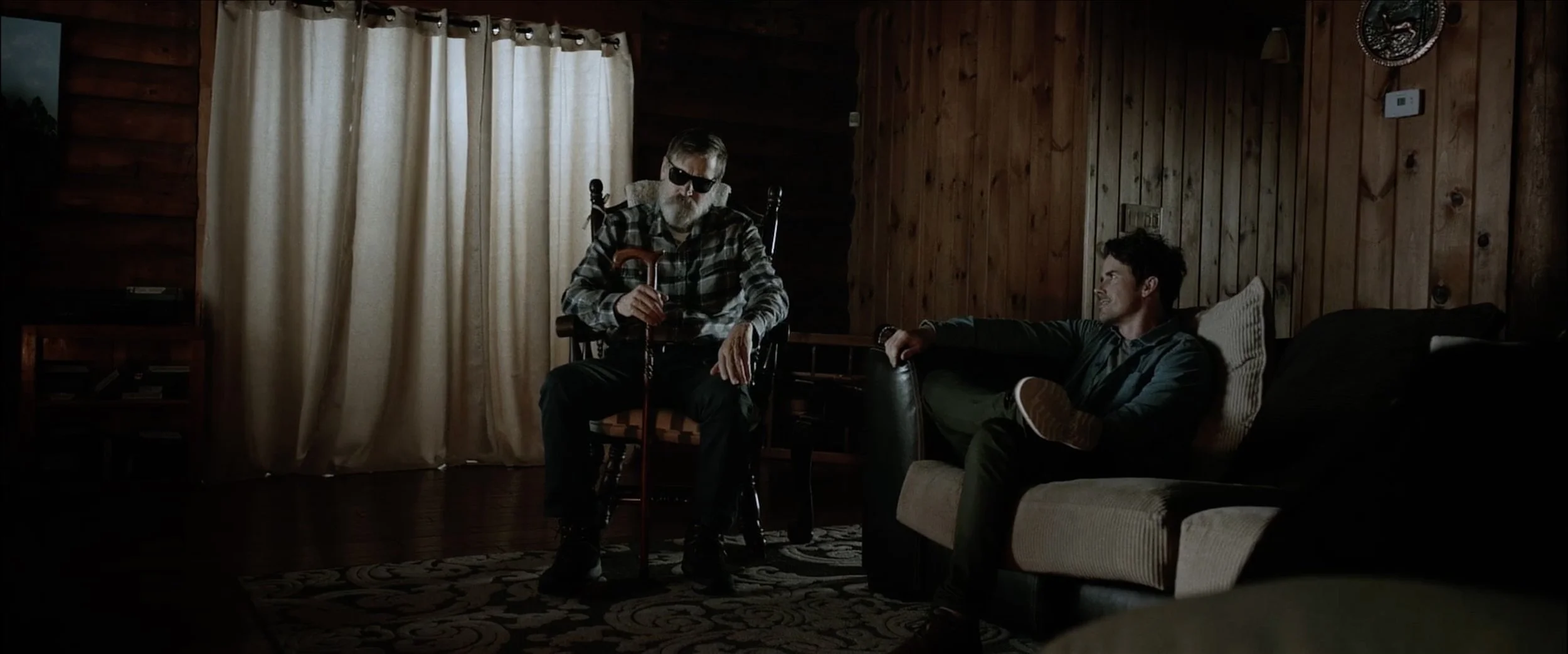
Bill Moseley and Julian Curtis share a tense moment inside the remote cabin set of The Fetus. The natural wood textures and minimal lighting helped ground the film’s horror in realism.
When people think of horror, they often picture graveyards, haunted asylums, or abandoned hospitals. But some of the most effective horror stories are set not in exotic locations, but at home. The places we live. The rooms we sleep in. The basements we avoid.
In The Fetus, the home isn’t just a backdrop, it’s a psychological weapon. We used real houses, thrift-store finds, and deliberate design choices to turn domestic spaces into breeding grounds for terror. From Maddox’s secluded cabin to Alessa’s tiny apartment, every location was chosen and shaped to reflect the characters’ emotional states, and to amplify dread.
Here’s how we did it.
Maddox’s Cabin: Isolation as a Character
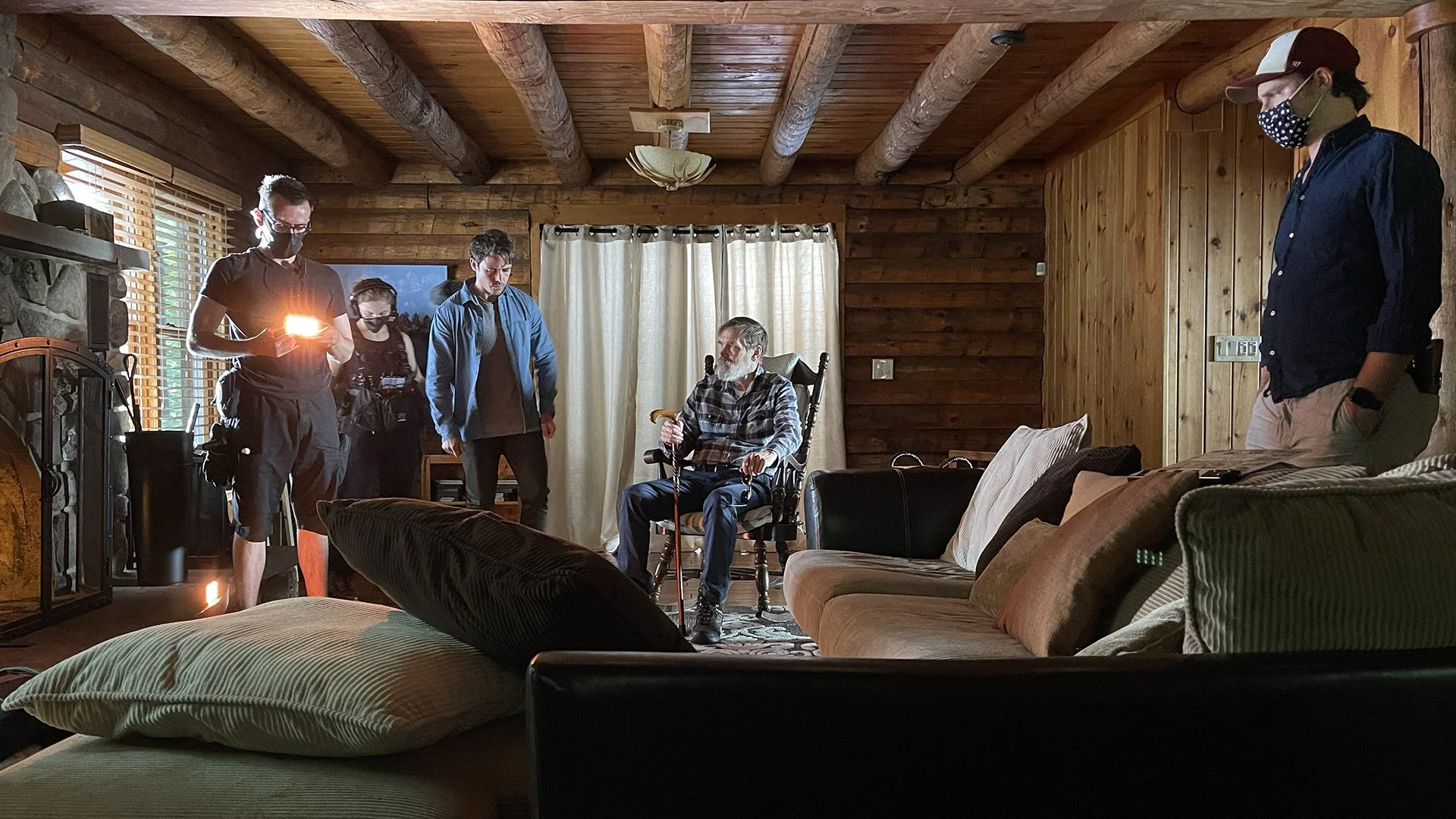
Behind the scenes inside Maddox’s cabin, where careful production design and lighting shaped the film’s sense of isolation.
The centerpiece of The Fetus’s domestic horror is Maddox’s cabin, a secluded house buried deep in the woods. It’s quiet. Too quiet. And that silence is the point.
We didn’t shoot on a studio set or backlot. We found a real cabin that already had the bones of what we needed, then redesigned it to reflect Maddox’s emotional state. Bill Moseley, who plays Maddox, suggested his character would keep things neat and uncluttered—he’s blind, after all, and clutter would be a danger. That insight shifted our production design entirely.
Gone were the piles of junk we initially imagined. Instead, the cabin became almost monk-like in its simplicity. Sparse, quiet, cold. The absence of detail created tension, forcing the audience to focus on what wasn’t there. This emptiness, paired with the sound design, created a slow, creeping anxiety.
We even removed the flat-screen TV mounted on the wall and replaced it with a vintage VCR setup and old tapes to reflect technology he used before the Vietnam war. Why would a blind man need a television? It was a small change, but a powerful one. Everything was grounded in logic, and that grounding made the horror feel disturbingly real.
The Basement: Where Domestic Becomes Demonic
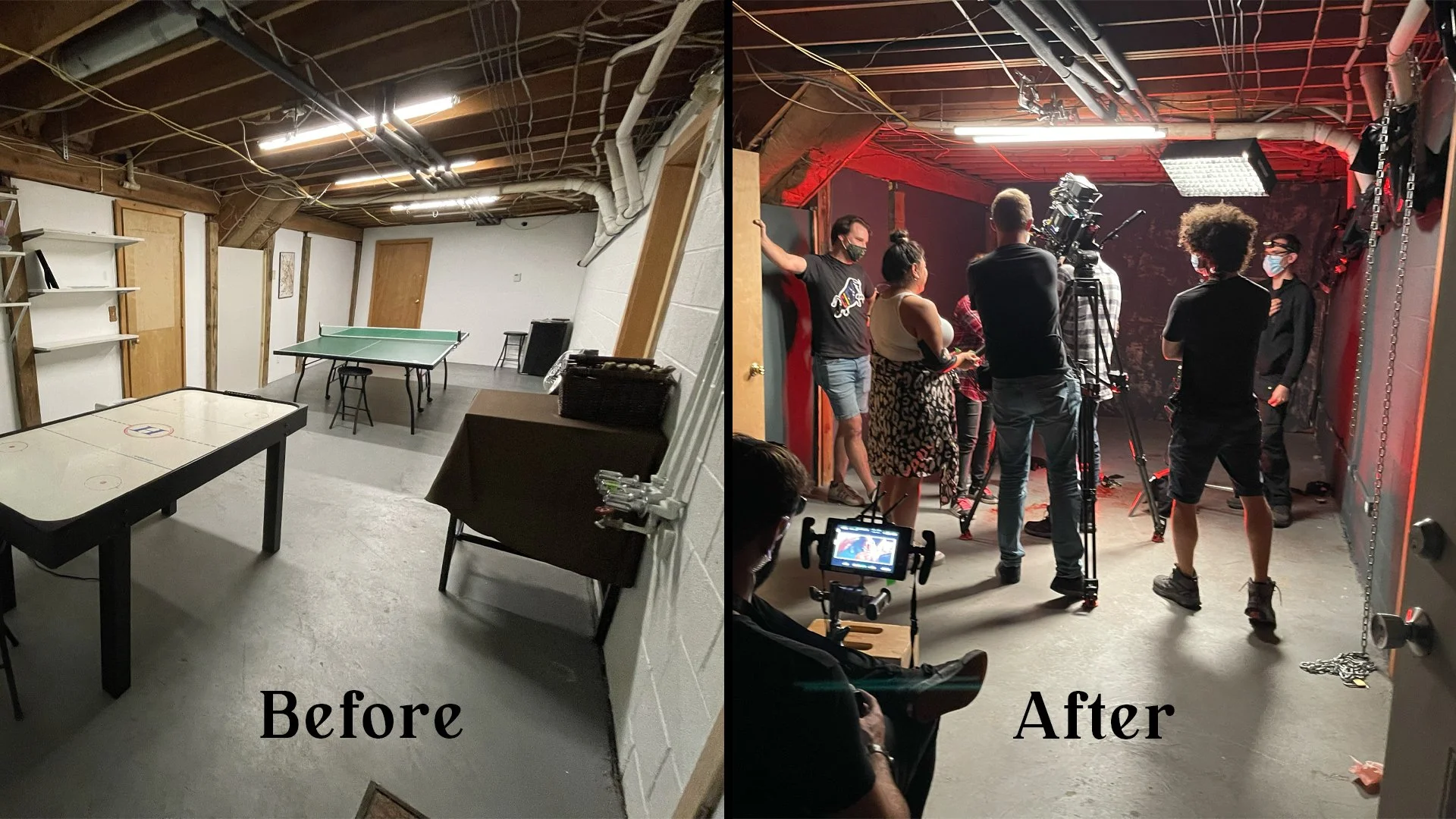
Before and after: the real basement location versus its transformation into the film’s climactic space through production design, lighting, and set dressing.
In horror, the basement is sacred. It’s where secrets hide. Where screams echo. Where the supernatural seeps through the cracks in reality.
For The Fetus, the basement is where Alessa becomes imprisoned, where Maddox reveals his true past, and where the demonic portal opens.
But our real-life basement? A bright white room filled with random storage items, tabletop games, and exposed water pipes.
We transformed the space by painting the walls gray and removing select overhead lights to reduce the brightness. Storage was neatly pushed aside or removed in select scenes to reflect Maddox’s organized nature. Even the exposed pipes were wrapped, not just to hide them, but to suggest Maddox was practical and prepared for leaks.
It’s this blend of realism and restraint that made the horror work as it felt lived-in, and that made the supernatural elements even more jarring when they appeared.
Chris’s Apartment: Tidy, Compact, and Telling
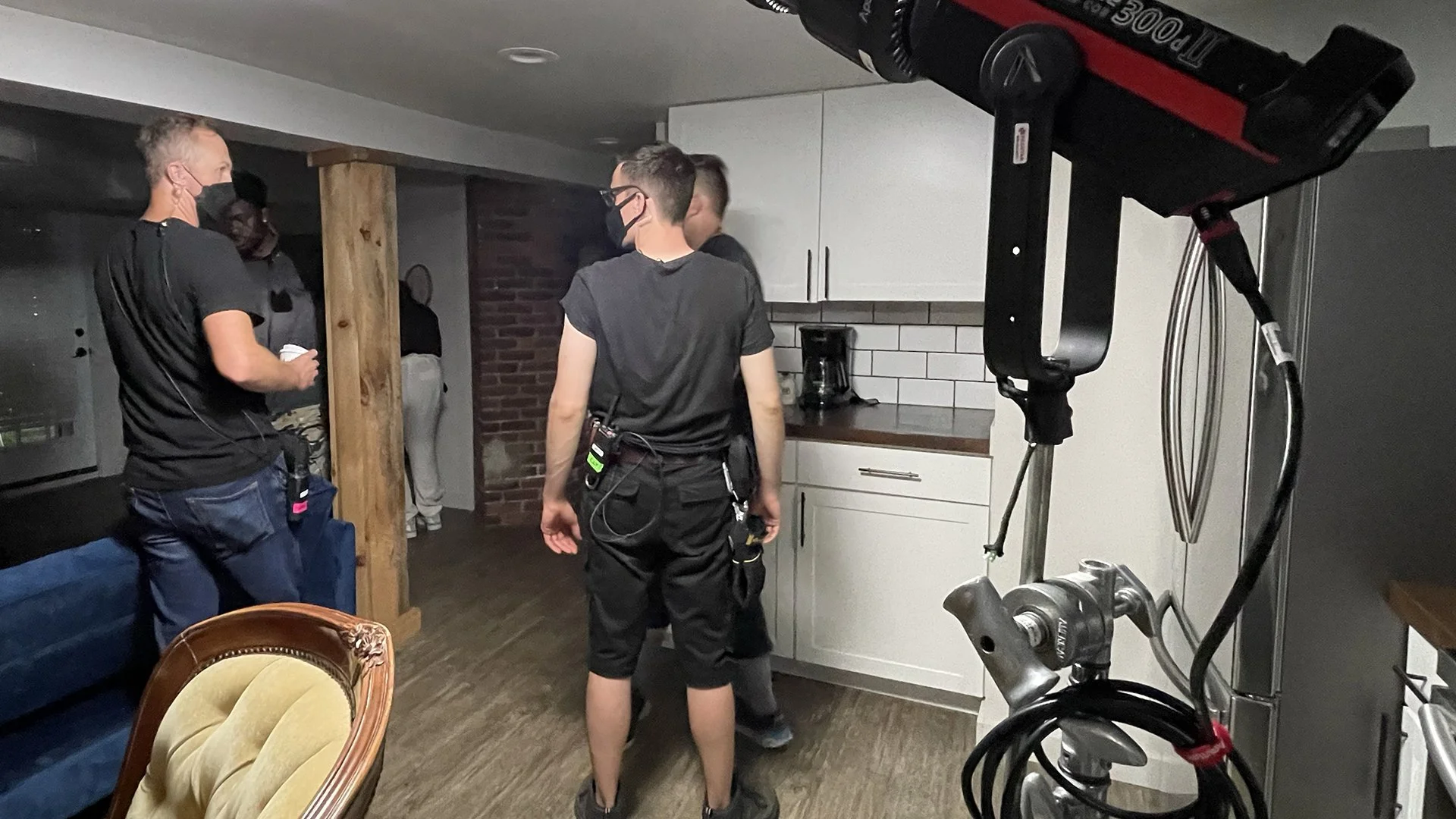
Crew members prep a scene inside Chris’s tidy, compact apartment. The close quarters challenged us to find creative camera angles that reflected his emotionally isolated world.
In stark contrast to Maddox’s bright and spacious home, Chris’s apartment was deliberately designed to feel compact and controlled. Every detail, from the low ceilings to the clean, streamlined furniture, reflects the minimalist lifestyle of a bachelor who lives alone. It’s tidy, efficient, and impersonal, with just enough personality to show someone who values structure over connection.
There’s nothing overtly menacing about the space. Its power lies in subtlety. The apartment’s physical constraints of narrow rooms, tight hallways, and lack of space quietly echo Chris’s emotional isolation. It’s not a place built for growth, chaos, or family. It’s a place to maintain a routine, to stay guarded.
Shooting in the space came with real challenges. Our crew had to get inventive by clearing closets to tuck away cameras and using doorways and reflective surfaces to create visual depth. Production designer Jaclyn Amor replaced all the wall décor (both to avoid clearance issues and to shift tone), and she also layered in circular design motifs throughout the apartment. These subtle patterns helped foreshadow the demonic portal that appears later in the story.
Making the Familiar Feel Foreign
Domestic horror works because it violates the spaces we trust the most. In The Fetus, we didn’t have the money for huge locations or massive builds, but what we did have was intention. Every lamp. Every curtain. Every stain on the wall was chosen to serve the story.
By grounding the horror in real, relatable environments, the fear lingers long after the credits roll. It follows you into your own home. Into your bedroom. Into your basement.
And that’s where The Fetus lives, not just in your mind, but in the everyday spaces you thought were safe.
🎬 Ready to Experience the Madness?
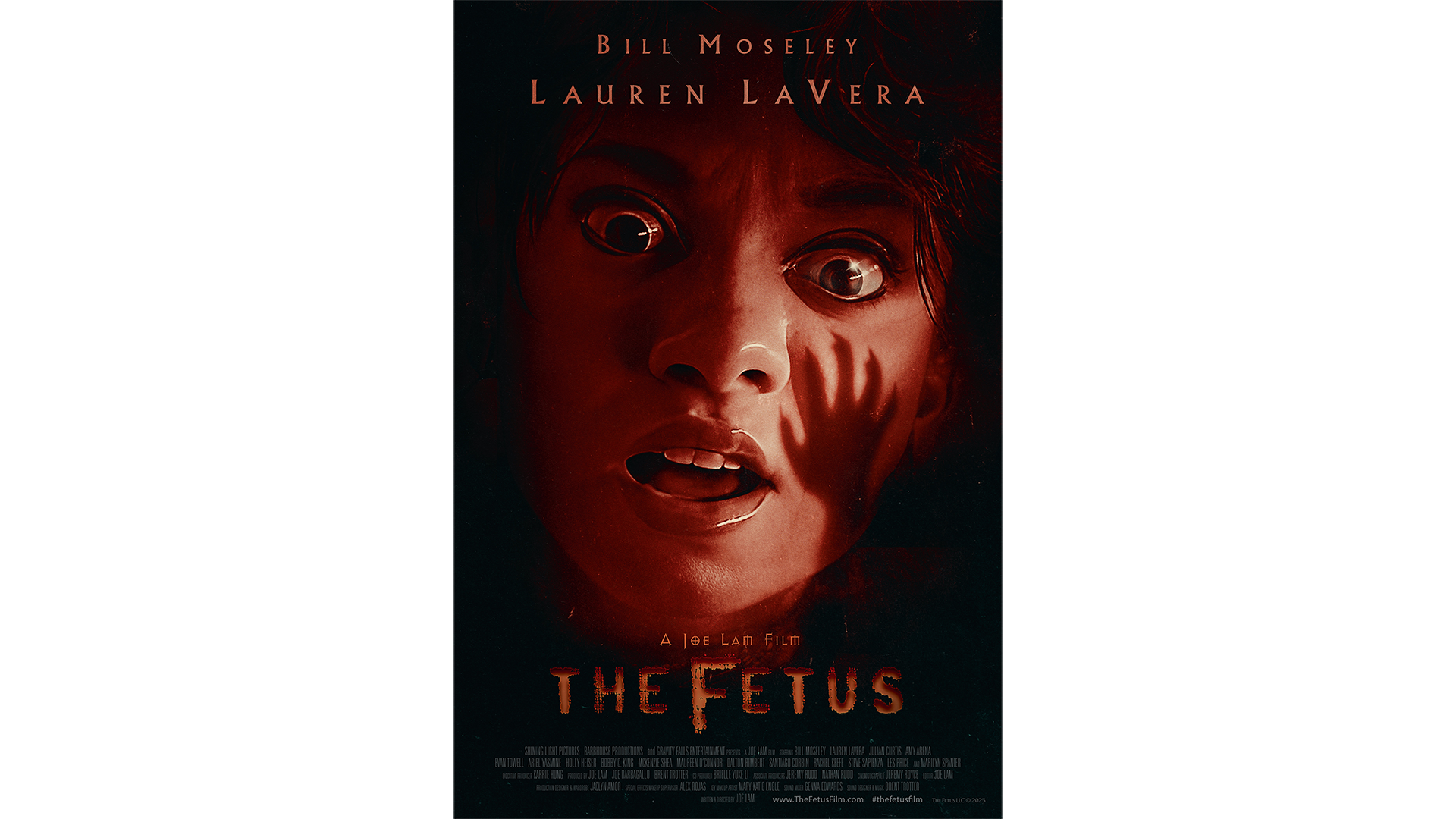
Official movie poster for The Fetus, starring Lauren LaVera and Bill Moseley.
If you haven’t seen The Fetus yet, now’s the time. Witness the chaos, creature effects, and twisted storytelling that critics and horror fans are raving about.
📕 Want the full behind-the-scenes story?
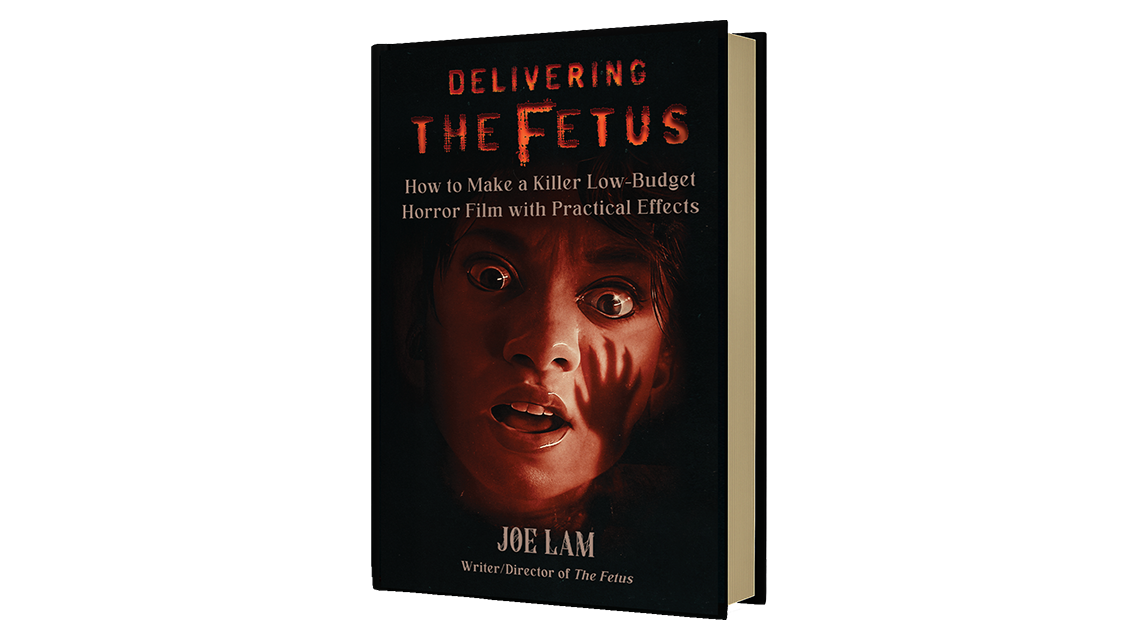
Free filmmaking book by Joe Lam, writer/director of The Fetus, offering step-by-step insights into low-budget horror and practical effects.
Get your copy of Delivering The Fetus, a brutally honest, step-by-step filmmaking guide packed with stories, lessons, and laughs from the set.