Directing Your First Feature: What No One Tells You About Day One on Set
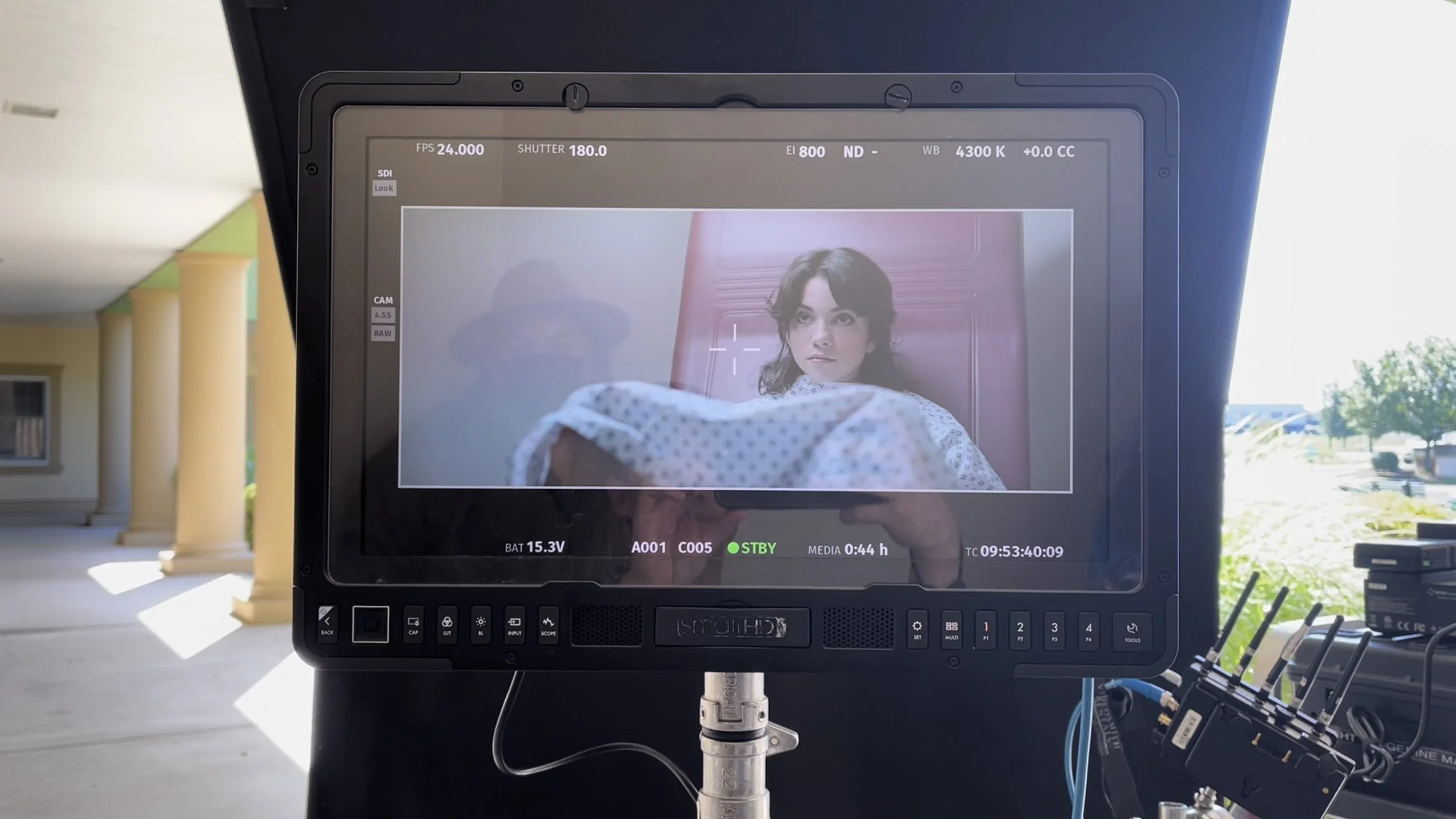
The first shot of Day One — Lauren LaVera on the director's monitor at 9:53 AM. Everything we'd planned for over a year came down to this frame.
You've written the script. You've raised the money. You've survived pre-production. And then Day One arrives — and everything feels different than you imagined.
By Joe Lam — Writer & Director of The Fetus
Published: February 7, 2026
There's a version of Day One that filmmakers dream about. The crew is ready. The sun is perfect. The actors are in the zone. You call action and everything clicks into place. That version exists, but it's not the one that teaches you anything.
The real Day One is something else entirely. It's the morning you've been building toward for over a year through writing, funding pitches, casting calls, crew negotiations, location scouts, and weather panic attacks. It’s a moment that hits you all at once as the first car pulls into the lot and the crew starts unloading tables for breakfast. This is it. This is actually happening.
I directed my first feature, The Fetus, after twelve short films and two decades of building toward this moment. And still, nothing fully prepared me for what Day One actually felt like, or what it demanded. Here's what I wish someone had told me.
The Safety Meeting Is Your First Directing Job
Before you roll a single frame, your 1st AD runs a safety meeting. On The Fetus, that fell to our AD Josh Long, who walked the crew through the day's schedule, COVID protocols, meal breaks, and company moves. Then he handed it over to me.
Nobody tells you this, but that moment of standing in a circle with your crew for the first time is your first real directing job of the film. It has nothing to do with cameras. It's about tone. It's about trust. I looked around at people I'd hired over months of interviews and email threads, many of whom I was meeting in person for the first time, and I felt the weight of what we were about to do together.
I thanked everyone for showing up on time, ready to work, and committed to the film. I told them that The Fetus was no longer just my movie as the actual creation of it now became ours. A collective vision. A shared effort.
I also made it clear that my door was always open. If anyone had an issue, big or small, they could come directly to me. That kind of openness on Day One sets the tone for the entire shoot. People work better when they feel respected. Don't skip this moment. Don't rush it.
Your First Shot Will Surprise You — Let It
On the very first day of filming with Bill Moseley, his opening scene had his character Maddox step onto the porch, cock a shotgun, and deliver a series of threatening lines. I'd spent over a year writing those lines. I knew every beat.
Then Bill walked through it and quietly offered a suggestion: scrap the multiple lines and say just one, "Who's there?"
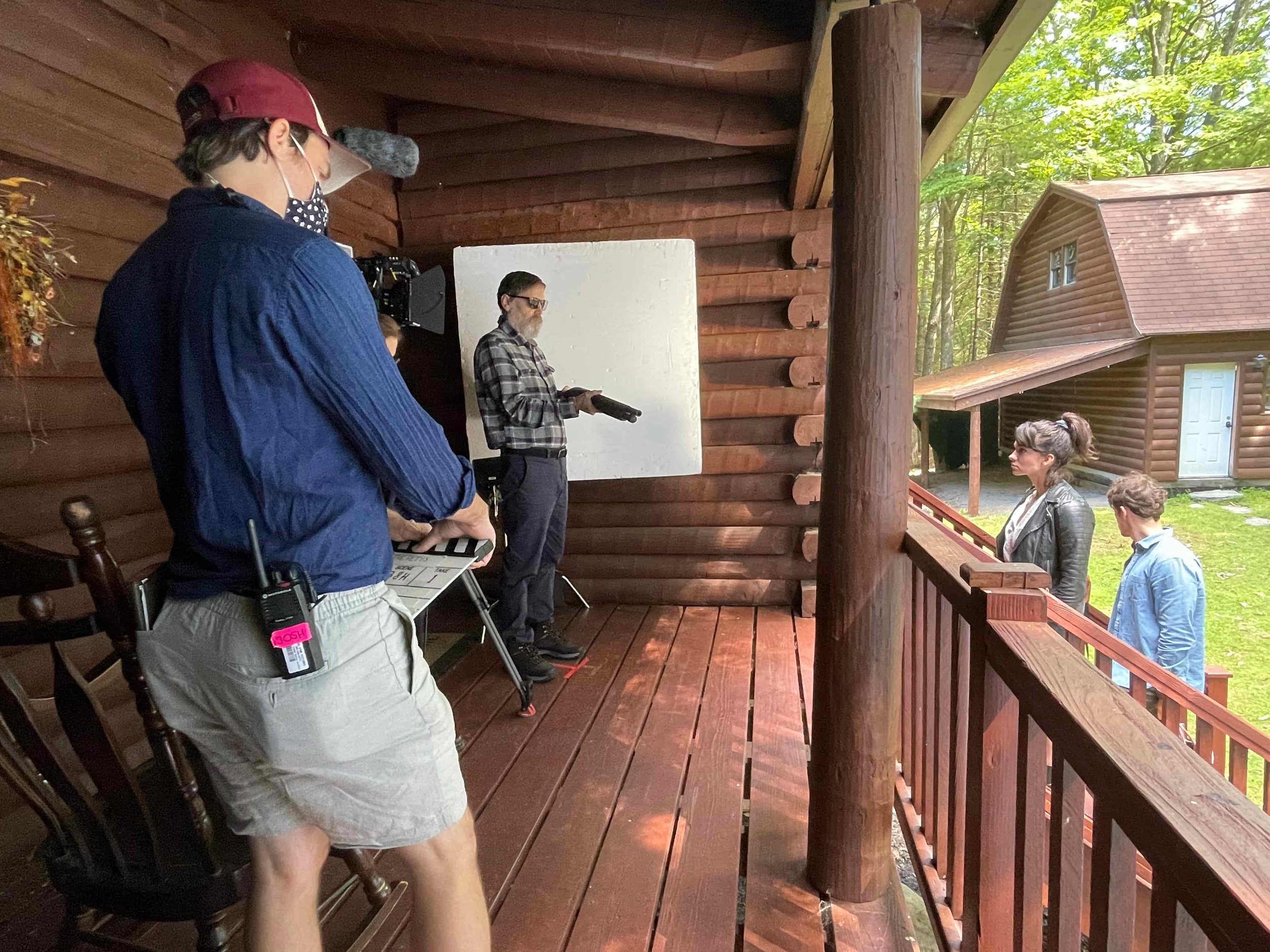
Bill Moseley on the cabin porch during one of the first scenes filmed, the moment he suggested scrapping multiple lines for a single "Who's there?" and the shotgun said the rest.
My first instinct was to hesitate. This was the very first shot with our lead actor, and I'd lived with those words for a long time. But then I caught myself. This was exactly the kind of moment I believed in where I allowed myself to step back and let the actor find their own truth. Bill wasn't dismissing my writing, he was listening to the character. He understood, correctly, that a cocked shotgun carries more threat than any amount of dialogue. Visual storytelling won.
So I let go. And from that moment, I gave Bill full ownership of Maddox. Every look, every line, every beat in the film came from his deep understanding of the role. And the performance grew stronger for it.
The lesson: your prep gives you a plan. Day One will test whether you can release it. The directors who grip their blueprints too tightly miss the moments that make films memorable.
"Action" Is the Wrong Word
Here's a small shift that changed everything on set: I don't say "Action."
Instead, I use the phrase: "Whenever you're ready."
Clint Eastwood uses something similar: "Alright, go ahead." He's said that his theory of directing is to not insert the ego, but to let the actors bring everything to the table. I couldn't agree more.
The word "action" is a command. It imposes urgency on something that may not be ready. "Whenever you're ready" tells the actor: this moment belongs to you, and it starts when you're prepared to step into it. It lifts pressure, humanizes the process, and signals trust.
Several actors on The Fetus told me later that this one phrase put them at ease from the very first take. It made them feel like artists given permission to work, not performers waiting for a command.
Silence From the Director Isn't Disengagement, But You Have to Say That Out Loud
My directing philosophy is shaped by my background in documentary filmmaking. When you shoot documentary, you don't give people lines, you ask them to go about their day and capture the truth of their behavior. That instinct carried into narrative work. I don't want actors to "perform" a character. I want them to become one.
That means I give minimal performance notes. I hang back and observe. I trust.
The problem? Actors don't always know that's what's happening.
On our second day filming at Chris's apartment, my cinematographer Jeremy Royce pulled me aside. He'd overheard Lauren LaVera and Julian Curtis express concern as they weren't sure if they were delivering what I wanted, because I hadn't given much feedback.
I went to them directly. I reminded them of the conversations we'd had months earlier during rehearsals. "If something's off, I'll step in. But otherwise, I trust you." Lauren nodded. "I just want to make sure you're getting what you need from us."
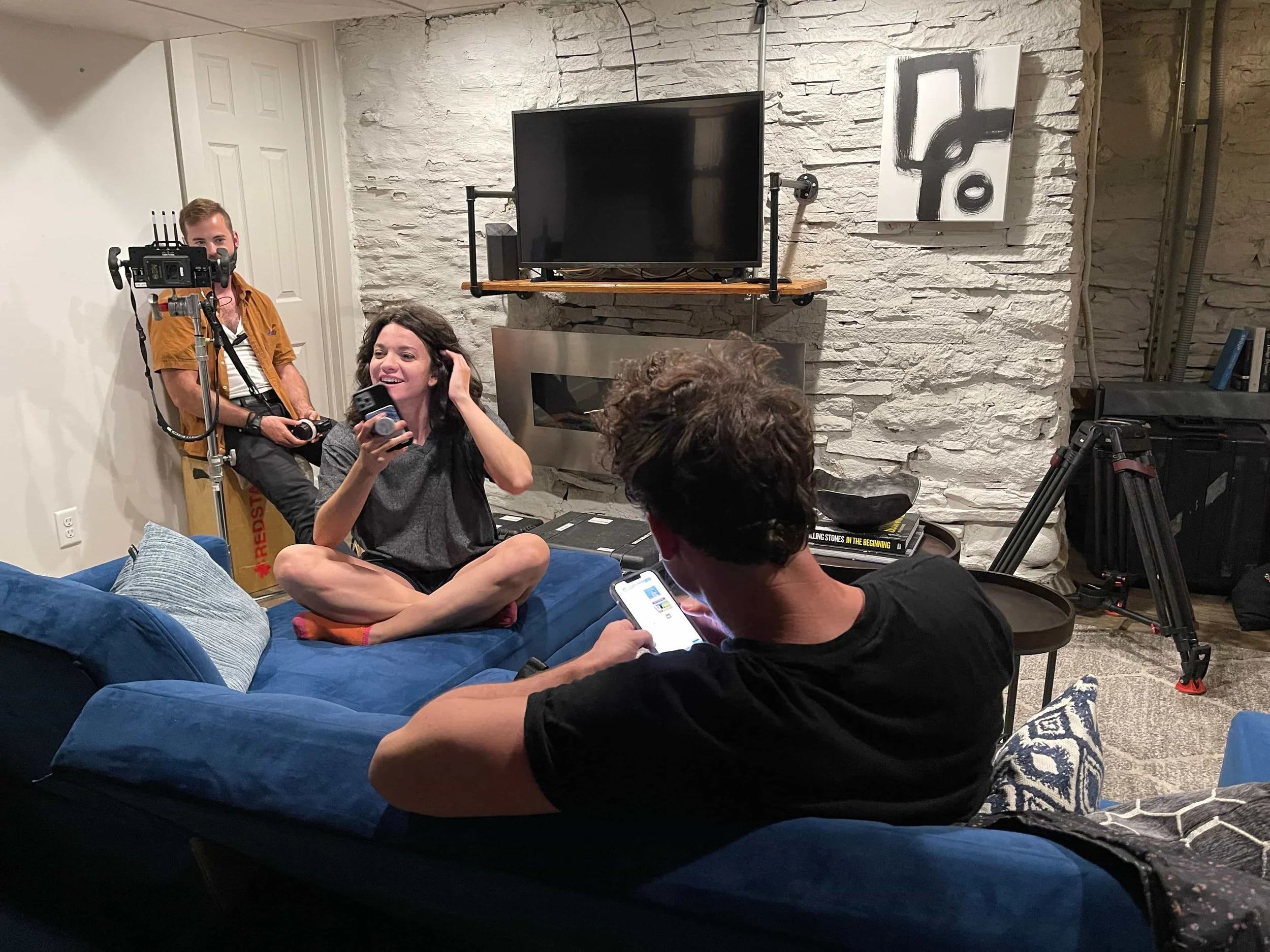
Lauren and Julian between setups on the apartment set — the exact environment where trusting your actors over directing them makes all the difference.
I smiled and said, "You're doing great. And if that ever changes, I'll let you know."
That simple reassurance changed everything. From that point forward, they stopped second-guessing themselves. Later, when people asked how I got Lauren to act with such intensity, my answer was always the same: "That was 100 percent her. I just created the space for her to own it."
The takeaway: a quiet director is not an absent one. But your actors won't know the difference unless you tell them. Set that expectation early, ideally in rehearsals, and again on Day One.
The Rehearsal Before the Rehearsal
Before we ever roll camera, the 1st AD calls an "action rehearsal", actors run the full scene from start to finish while key crew members observe. The DP adjusts framing and lighting, I tweak blocking, the sound mixer listens for problem areas, the set designer repositions furniture.
This is the step most first-time directors cut when they're running behind, and it's the one they regret most. By the time you call the first real take, your actors should already feel comfortable in the space, familiar with their props, and settled into the physical reality of the scene. Rehearsal isn't lost time. It's purchased efficiency.
We followed a consistent shot structure on The Fetus: master shot first (widest angle, full scene, establishes geography), then coverage in one direction (mediums and close-ups favoring one actor), then reverse coverage (opposite side), then inserts last (hands, objects, details). Shoot the full scene from start to finish with every setup, not just the moments that involve each character. This gives you maximum flexibility in the edit and keeps emotional continuity alive across takes.
Your Cinematographer Is Your Co-Director — Treat Them That Way
One of the things I prepared obsessively for was my relationship with our DP, Jeremy Royce. We did detailed tech scouts together, walked every location with my storyboards, talked through lenses, blocking, and lighting intent. All of it before Day One arrived.
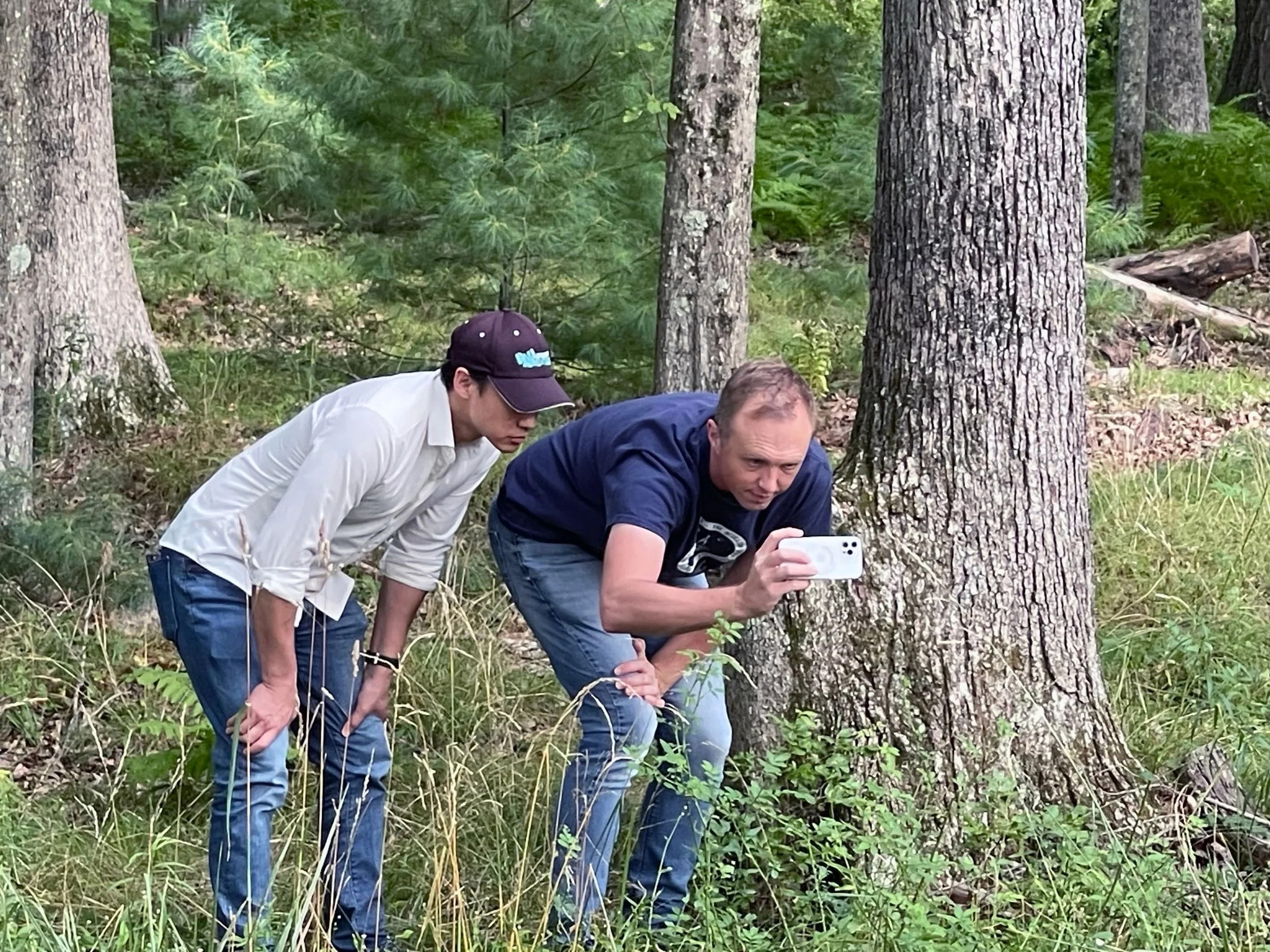
Joe and Jeremy during a tech scout in Pennsylvania — the kind of pre-production alignment that lets a cinematographer step in and direct when you're not there.
That investment paid off in ways I never anticipated.
Midway through production, I had to step away from set for an entire day. Rather than rescheduling, I called Jeremy and asked if he could take over directing duties while also operating as cinematographer. Because of how thoroughly we'd prepared, and how deeply he understood my visual sensibilities from the storyboards, he stepped into both roles seamlessly. Our co-producer Brielle had never seen a production continue without a director on set. But it worked, because the preparation was already there.
Later, when Jeremy had to leave due to a family emergency in the final two days, our gaffer Thomas Hutteau stepped up, and again, because of the visual language Jeremy and I had built together, Thomas was able to maintain continuity without missing a beat.
Your DP isn't just executing your vision, they're guarding it. Build that relationship before Day One. Let them inside your head. The shoots that fall apart often do so because the director and cinematographer never got fully aligned.
Listen to Your Sound Recordist (Even When It Slows You Down)
Sound is the one department first-time directors most frequently undervalue on set, and the one they regret ignoring most in post.
Our production sound mixer, Genna Edwards, was quietly monitoring audio levels while the rest of us were racing to capture images.
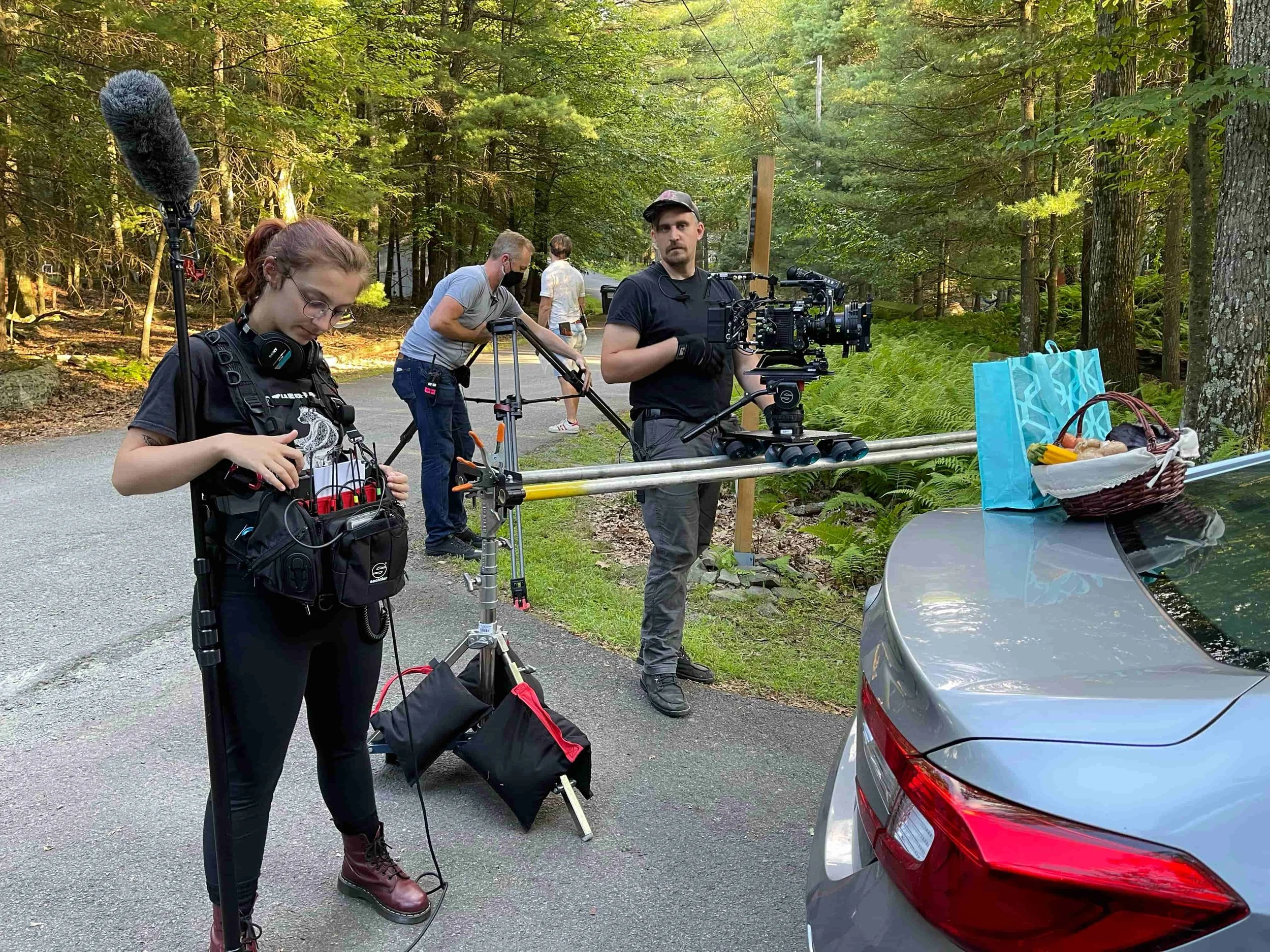
Genna Edwards (sound) and the camera crew setting up on location in Pennsylvania. While everyone else is watching the shot, Genna is listening to everything else.
Planes overhead, distant lawnmowers, a refrigerator hum in the background, she spotted them in real time and spoke up before we wasted footage. In horror-comedy, where timing and clarity are everything, a muffled punchline or a buried whisper can kill a scene.
People assume sound can be "fixed in post." That's a trap. ADR (additional dialogue recording) is expensive, time-consuming, and almost never as good as a clean on-set recording. Give your sound recordist the authority to call out problems in real time, and when they do, stop. Reset. Get it right. Your future self in the editing room will thank you.
What Day One Actually Is
Day One isn't the beginning. It's the payoff. It's the moment all your preparation converts into action and all your plans collide with reality.
You will not control everything. You will not execute every shot the way you imagined it. An actor will suggest something better than what you wrote. The light will do something you didn't plan for. Someone will step up when you least expect it.
What I remember most from Day One of The Fetus isn't a shot or a performance, it's the feeling of standing in a circle of people who believed in the same thing I did, watching them get to work. Two decades of short films, a year of development, months of prep, and there we were. Creating something together.
That's what no one tells you about Day One: it's not about you anymore. The moment the crew arrives, the film belongs to all of you. And that's not something to fear.
That's the whole point.
— — —
Joe Lam is the writer-director of The Fetus, a horror-comedy starring Bill Moseley and Lauren LaVera. His book, Delivering The Fetus: How to Make a Killer Low-Budget Horror Film with Practical Effects, is available now at DeliveringTheFetusBook.com.
👁 Haven’t seen the film yet?
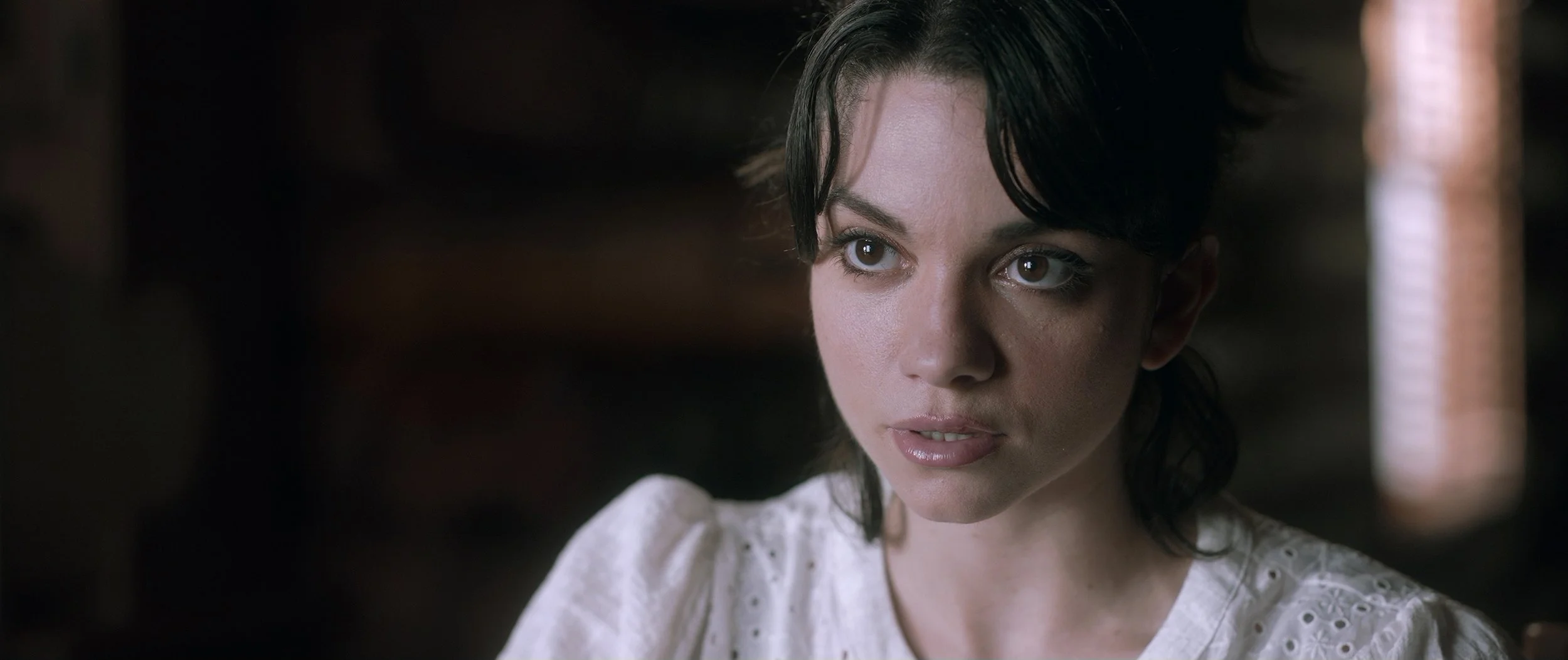
Watch The Fetus starring Lauren LaVera now.
See how it all comes together on screen, watch The Fetus.
👉 Want a free copy of our behind-the-scenes filmmaking book?
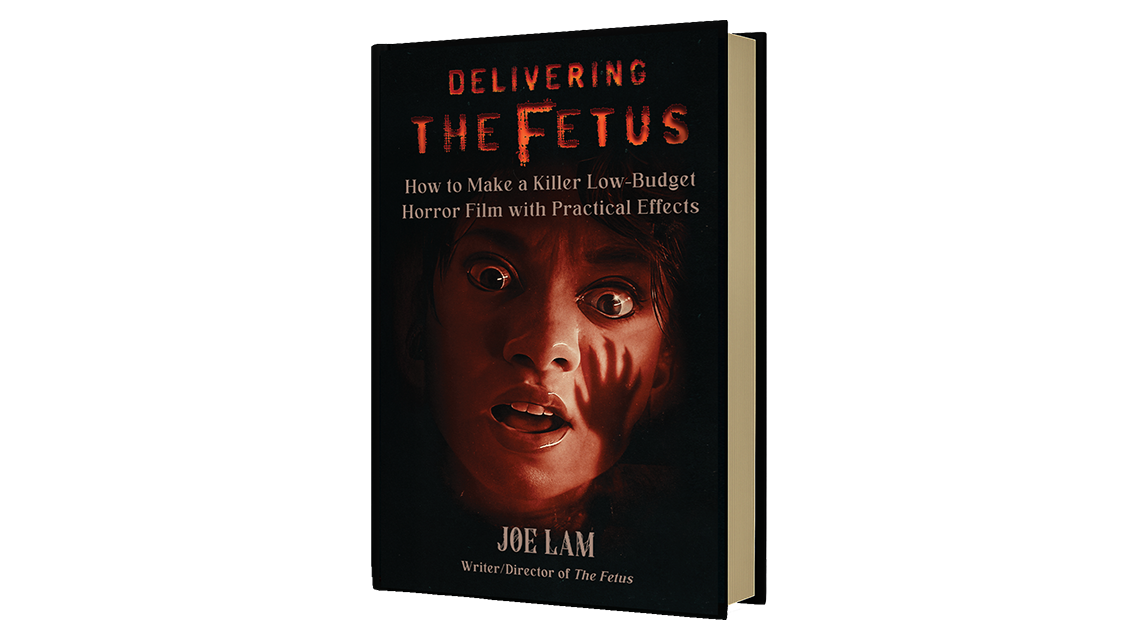
Free filmmaking book by Joe Lam, writer/director of The Fetus, offering step-by-step insights into low-budget horror and practical effects.
Go behind the scenes of The Fetus and dive into the practical FX, creature builds, and filmmaking chaos that brought this monster to life. Essential reading for indie filmmakers and horror fans who want a deeper look into the nightmare behind the movie.