How We Marketed The Fetus at Horror Conventions (And What Actually Worked)
By Joe Lam — Writer & Director
Published: January 10, 2026
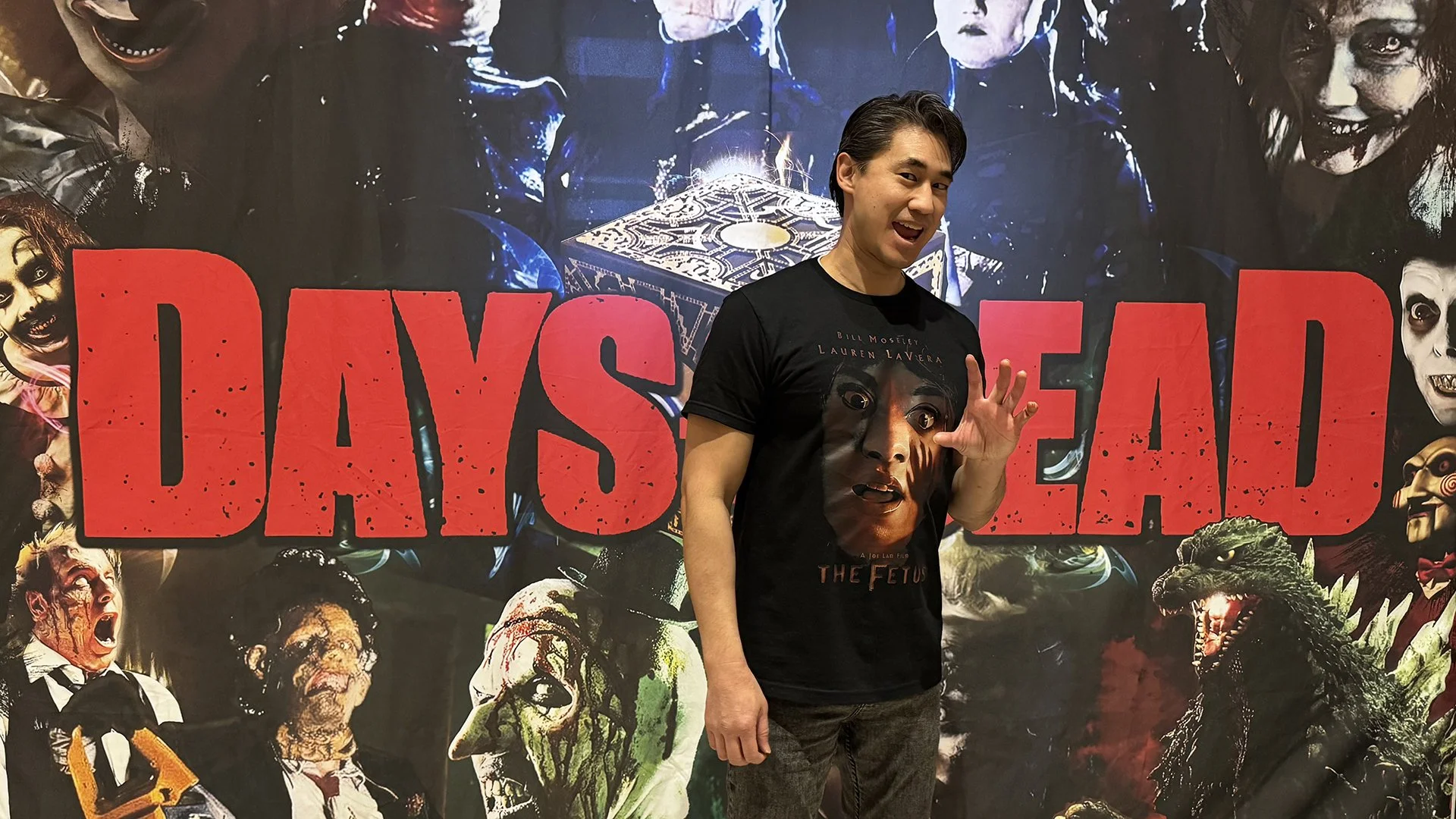
Joe Lam at Days of the Dead, representing The Fetus among the icons of horror—meeting fans, creators, and the community that fuels indie horror.
Horror conventions are loud, crowded, and overwhelming.
Hundreds of booths compete for attention. Posters blur together. Trailers play on loop. Everyone is trying to sell something. From movies and merch to autographs and photo ops, the entire floor is built to extract attention as quickly as possible.
When we started marketing The Fetus at horror conventions, we learned a hard truth early:
If you treat a horror convention like a sales floor, you’ve already lost.
For indie horror films, conventions aren’t about hard sells or closing transactions on the spot. They’re about tone, trust, and long-term audience building. They’re about planting a seed, not forcing a conversion.
Here’s what actually worked for us and why.
Stop Selling Your Horror Film (Start Inviting Fans In)
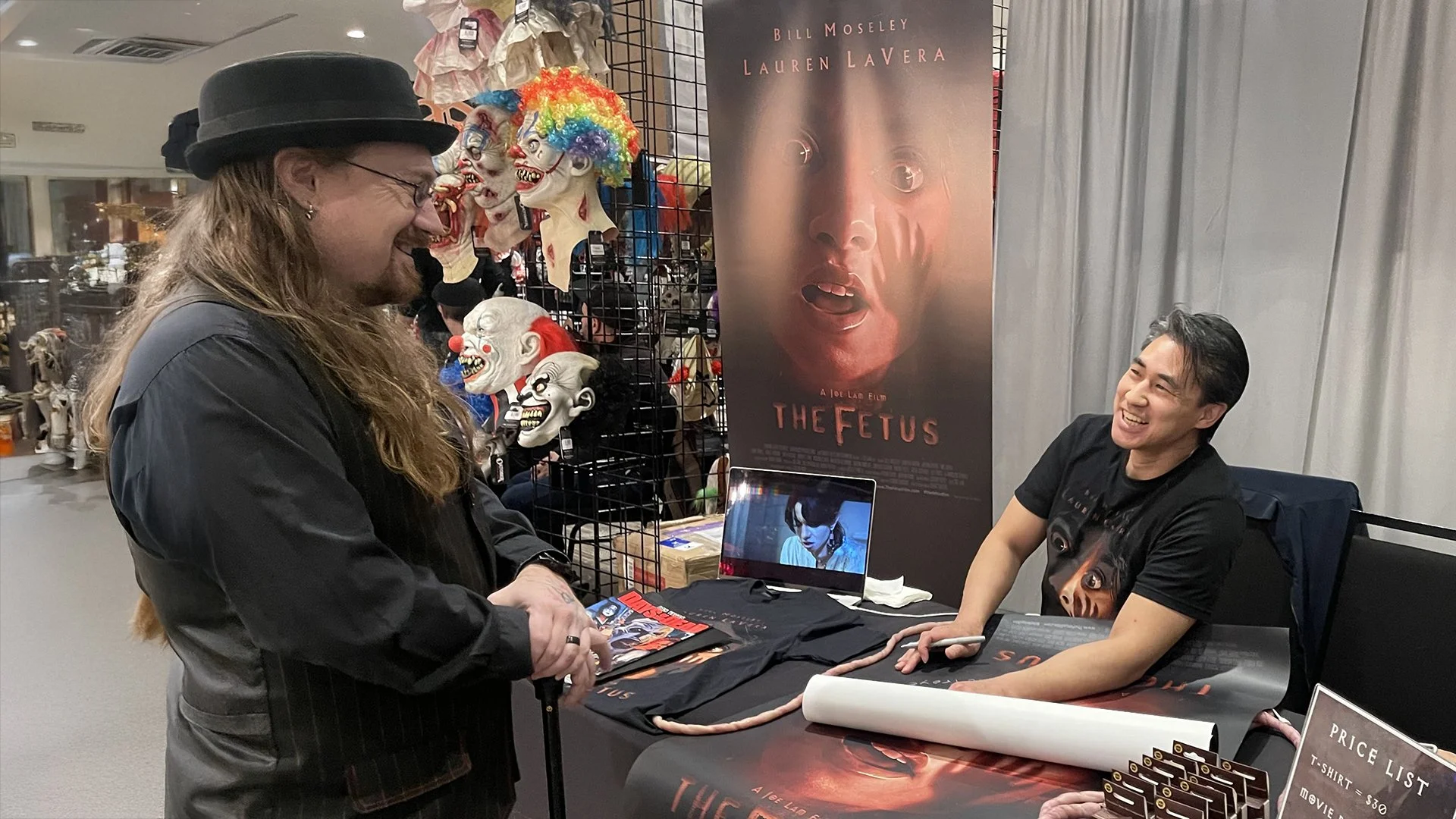
Connecting with fans at The Fetus booth. Conversations, signings, and hands-on interaction mattered more than hard selling at horror conventions.
Most indie filmmakers approach horror conventions with the same question:
How do I convince someone to watch my movie right now?
That mindset creates resistance.
Instead of only pitching The Fetus, we focused on starting conversations.
While we played the trailer to get their attention, after they watched it, we didn’t try to sell them anything. Instead, we asked questions:
“What kind of horror genres do you like?”
“What’s your favorite horror movie of all time?”
Once fans felt seen, the film came up naturally.
“Is The Fetus something you would watch?”
Would you like to enter our monthly giveaway?
Horror fans don’t want to be sold to. They want to be included.
Design Your Booth Like a Horror Experience, Not an Ad
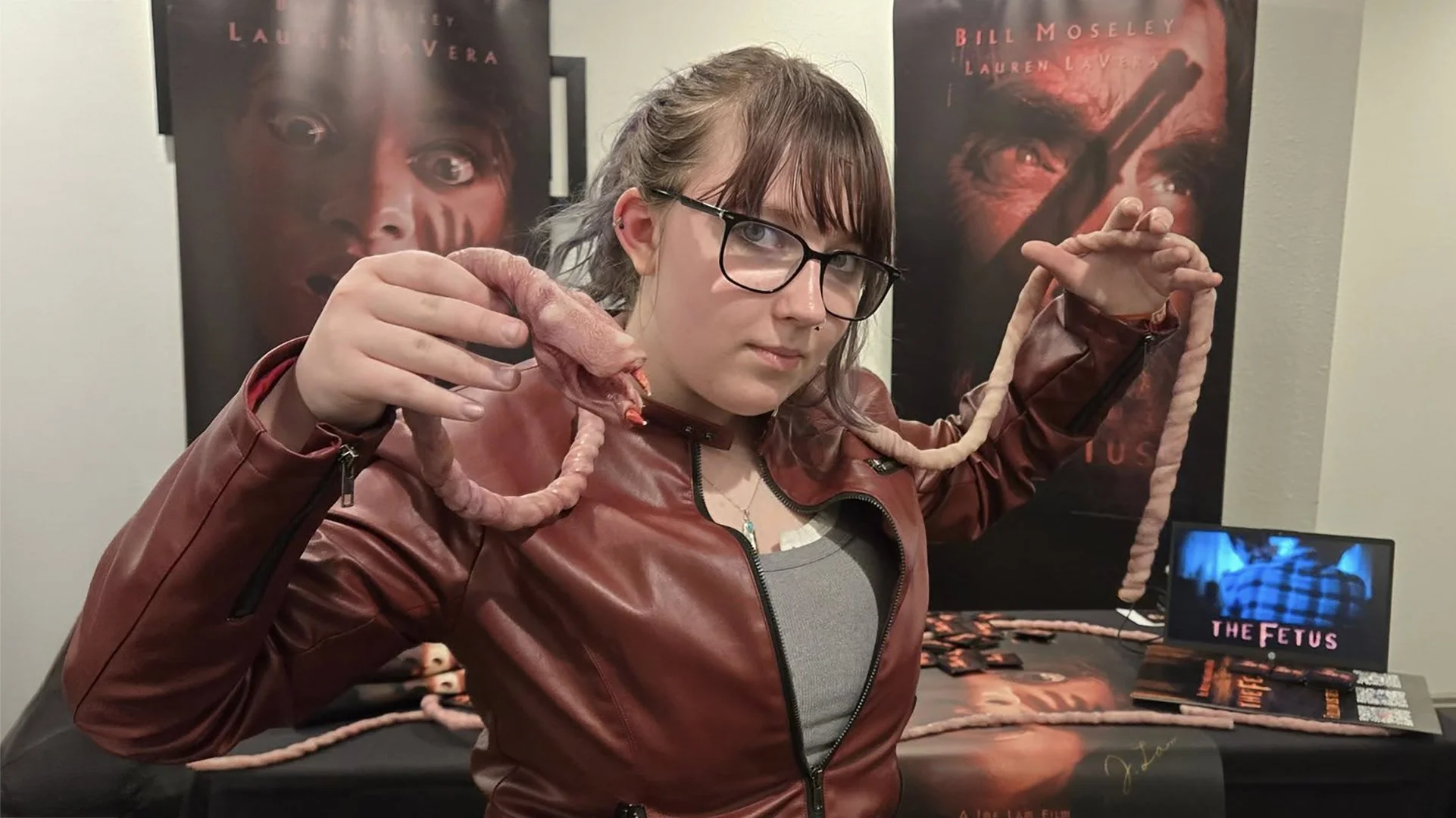
A fan interacts with The Fetus creature prosthetic at our horror convention booth—hands-on moments like this turned curiosity into genuine connection.
At a horror convention, your booth has seconds to make an impression. People are already overstimulated, already tired, already filtering out noise. We knew we couldn’t outspend studios or build massive LED displays. So we focused on mood over marketing. Our booth was designed to communicate what The Fetus felt like, not explain what it was about.
We leaned into:
Video monitor that played the trailer on loop
Minimal copy that didn’t overwhelm
Actual film props and prosthetics
Film-related merchandise
One of the most effective elements wasn’t a sign or a screen. It was the fetus creature prosthetic itself. We invited fans to touch it. Hold it. Take photos with it. That tactile experience did more than any pitch ever could. It made the film feel real. It created a visceral reaction. It gave people a story to tell when they walked away.
We didn’t explain the movie.
We let fans discover it.
If we emotionally affected someone through curiosity, discomfort, or laughter, then we had done our job.
Horror Convention Merch Should Feel Story-Driven
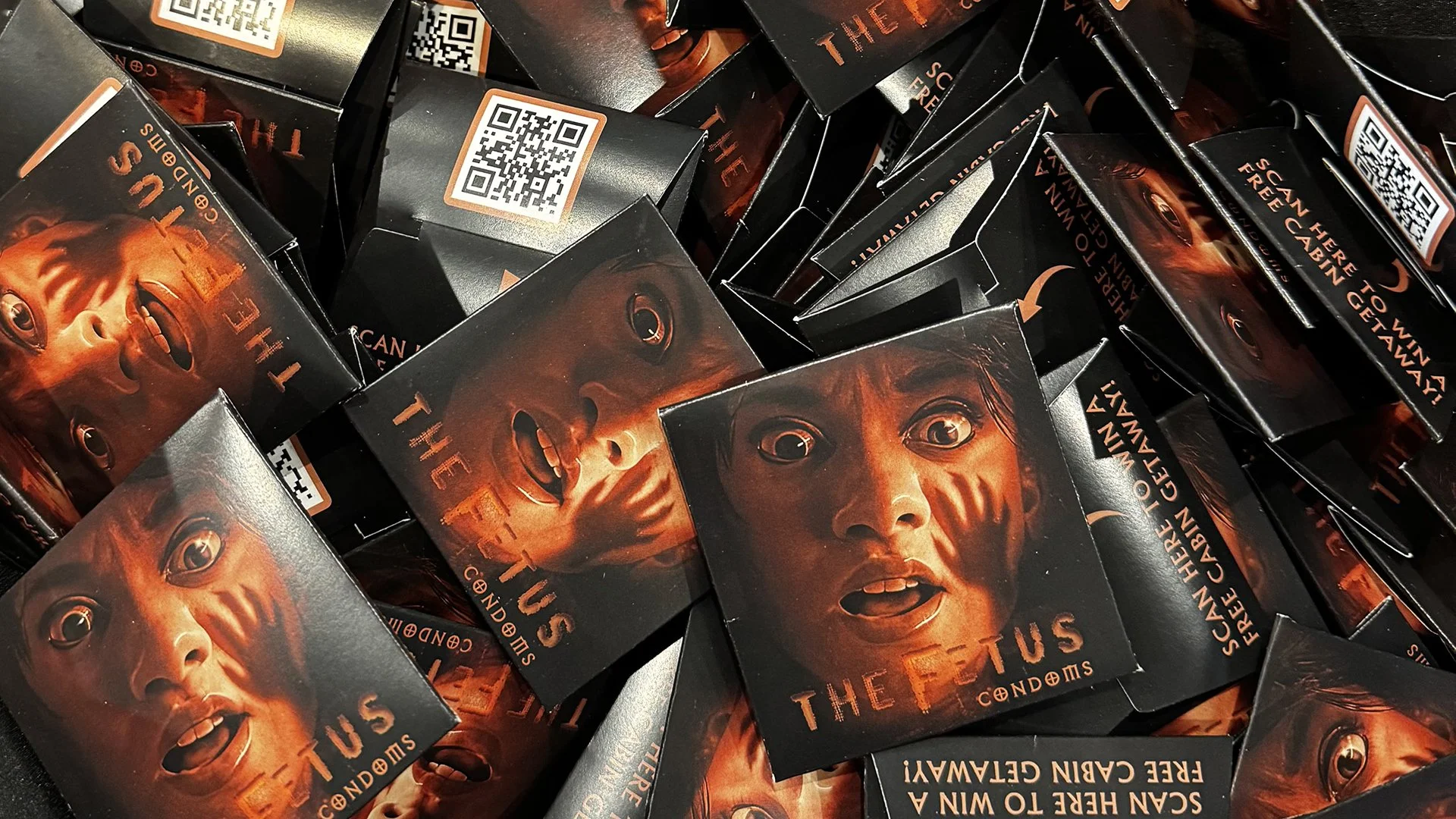
Stacks of The Fetus condom wallets ready for giveaway at a horror convention. Story-driven merch designed to spark conversation, laughter, and long-term fan engagement.
Most indie film merch looks like souvenirs. Logos slapped on shirts. Posters that feel like ads. Items people buy out of politeness and forget by the time they get home.
We treated merchandise as world-building.
Everything we sold or gave away felt like it belonged inside The Fetus universe. It wasn’t branded merch for the sake of branding. It was an extension of the story.
The clearest example was The Fetus Condom Wallets. They weren’t shock gimmicks. They weren’t random jokes. They were thematic, absurd, uncomfortable, and perfectly aligned with the tone of the film. Fans didn’t just take them.
They laughed.
They showed friends.
They carried them around the convention.
And when someone carries your merch across the floor, your marketing travels with them. Merch stopped being a product and started becoming a conversation starter. Rarely did we ever find them abandoned on the show floor, a great sign that fans valued the item.
Street-Level Horror Marketing Still Works (If It’s Intentional)
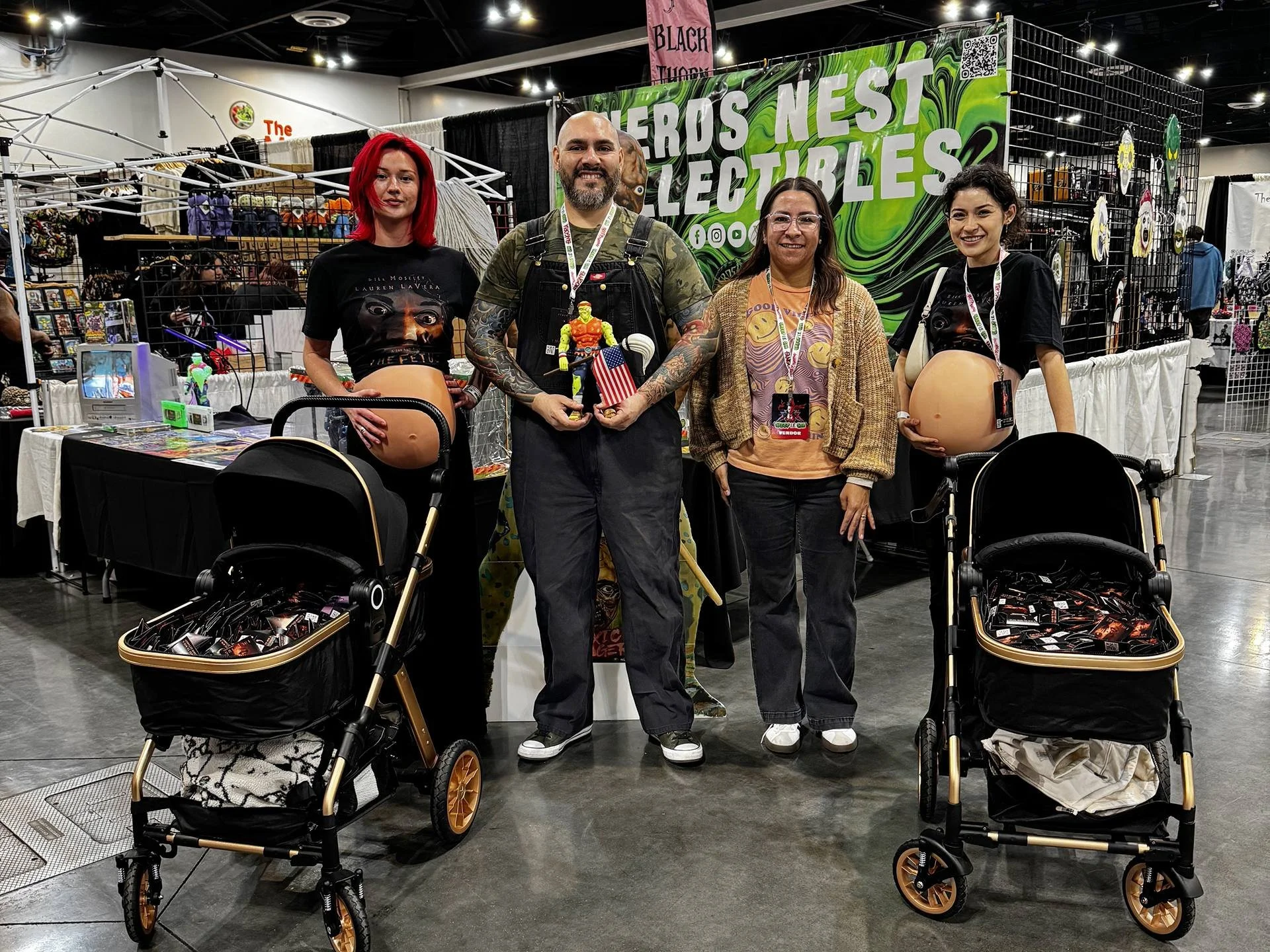
Street-level horror marketing at a convention: our team wore fake pregnant bellies and pushed strollers filled with The Fetus merch turning heads, starting conversations, and making the film impossible to ignore.
At one convention, Creep I.E. Con, we didn’t rely only on the booth.
We mobilized street-team models who walked the convention floor wearing fake pregnant bellies. They pushed baby strollers. They handed out free condom wallets. It was impossible to ignore, but never aggressive.
People stopped. They laughed. They asked questions. They took photos. They followed the trail back to the booth.
The key was intention.
Nothing felt spammy. Nothing interrupted people mid-conversation. It was visual, playful, and completely on-brand. The goal wasn’t disruption. It was curiosity.
The Real ROI of Horror Conventions Is Long-Term
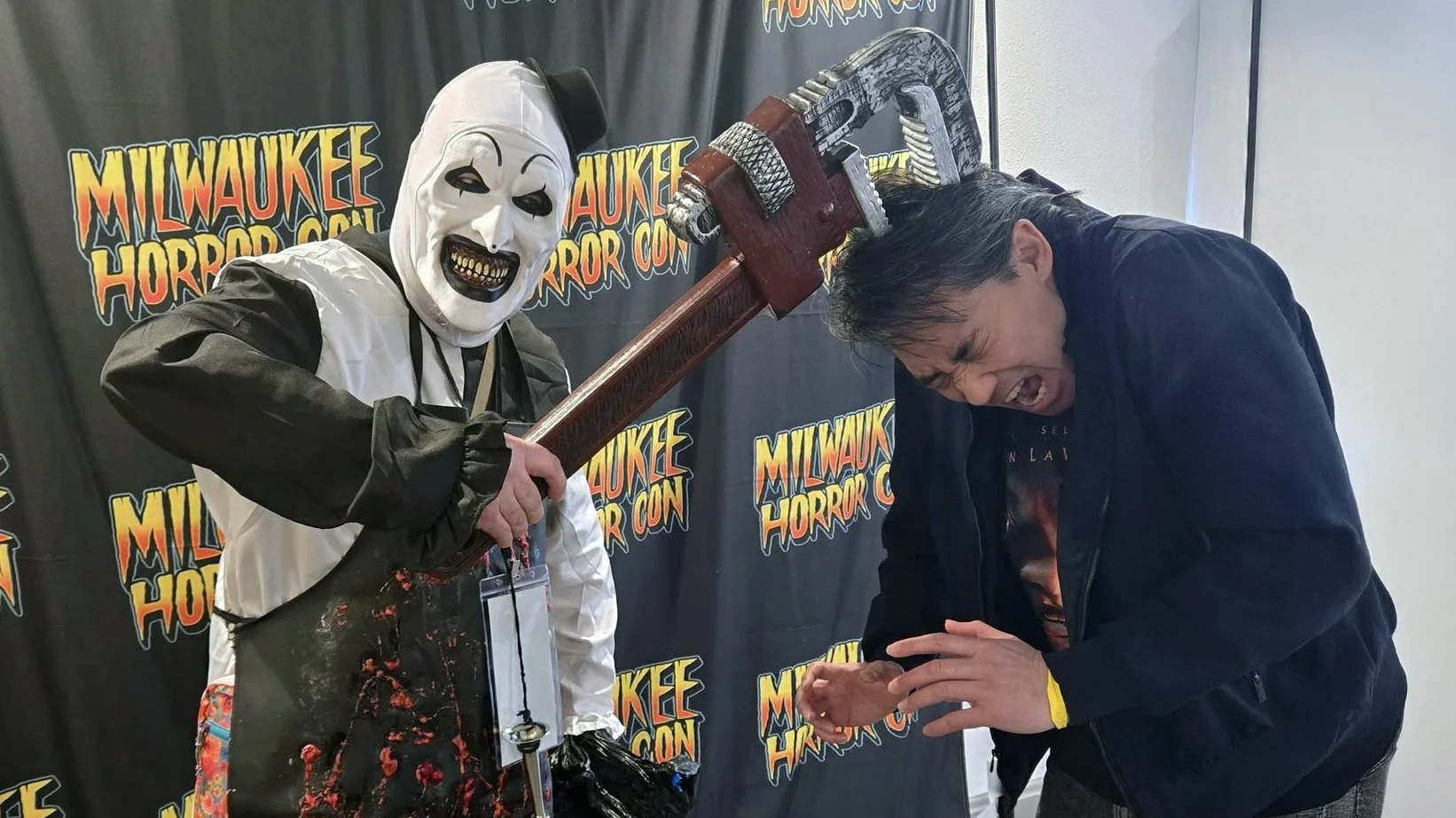
Filmmaker Joe Lam leans into the fun during a photo op with an Art the Clown cosplayer at a horror convention—because horror cons are as much about shared moments as they are about movies.
If you judge horror convention success by on-site sales alone, you’ll miss the point. Sometimes, I would walk the floor to take a break from our booth and snap photos with cosplayers to enact a brutal attack. These moments allowed me to connect with die hard fans who really dressed the part so they could act out their character, while providing us with fun content to share with fans on social media.
The real results showed up later:
Fans who followed the film for years
Influencers who discovered us organically
Press leads that began as casual conversations
Merch and VOD sales long after the event
Audience goodwill that carried into distribution
Horror fans remember how you treat them.
What Actually Worked for The Fetus
Looking back, the most effective horror convention marketing strategies weren’t flashy. They were foundational:
Respect the audience
Make the film feel tangible
Let fans discover instead of convincing them
Design everything with intention
Think long-term, not transactional
Horror conventions aren’t about being the loudest booth in the room.
They’re about being the most authentic.
Are Horror Conventions Worth It for Indie Filmmakers?
Yes, but only if you treat them as community spaces, not marketplaces. That’s how The Fetus found its audience.
Not through pressure. Not through hype.
But one honest conversation at a time.
👁 Haven’t seen the film yet?
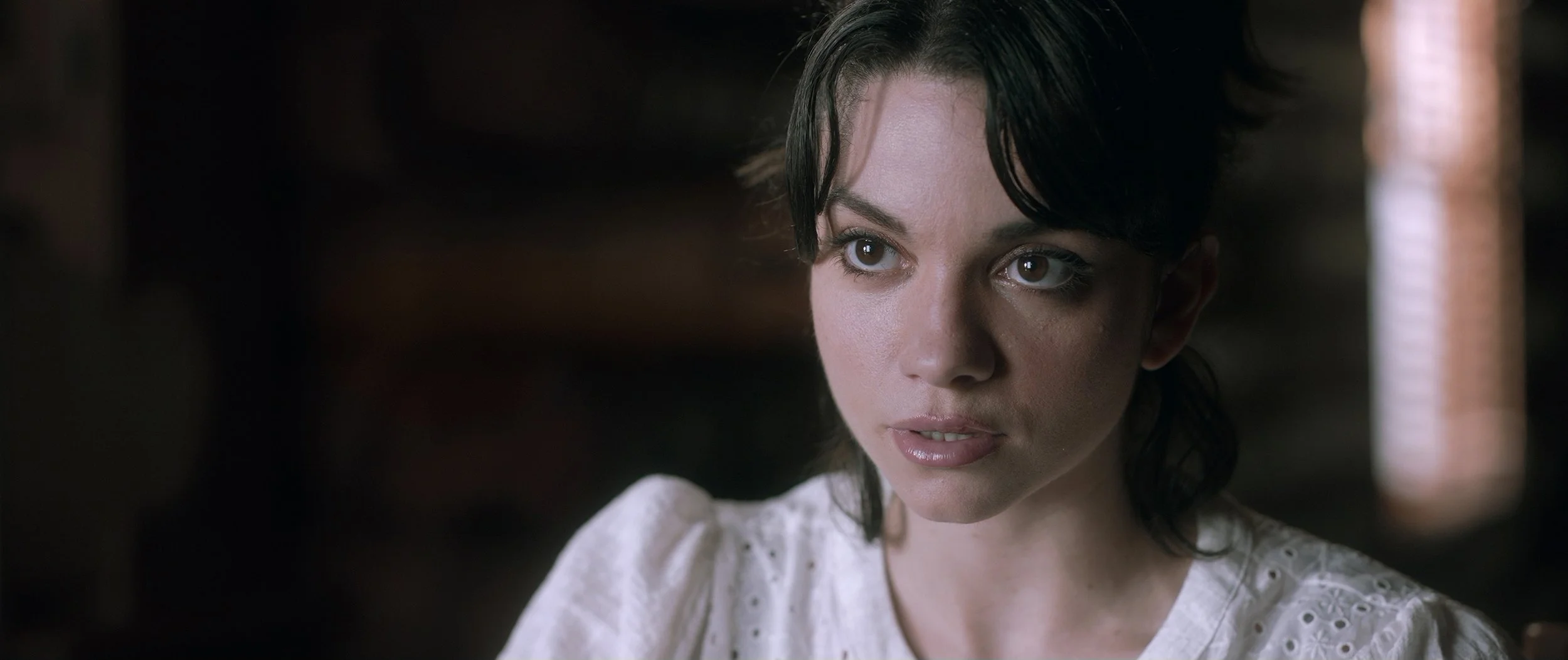
Watch The Fetus starring Lauren LaVera now.
See how it all comes together on screen, watch The Fetus.
👉 Want a free copy of our behind-the-scenes filmmaking book?
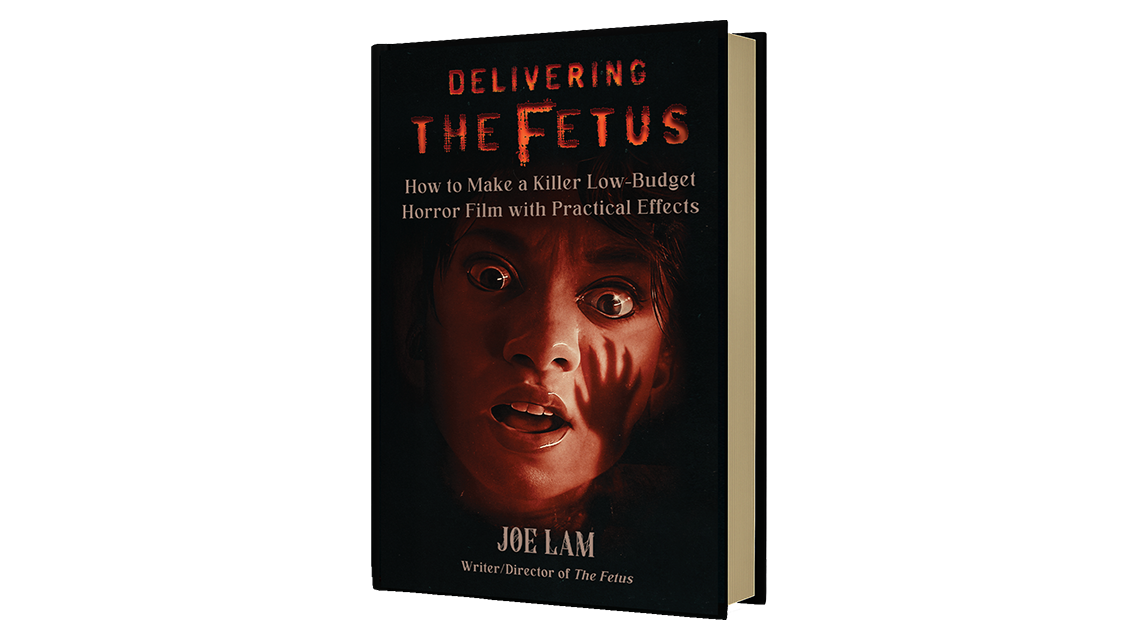
Free filmmaking book by Joe Lam, writer/director of The Fetus, offering step-by-step insights into low-budget horror and practical effects.
Go behind the scenes of The Fetus and dive into the practical FX, creature builds, and filmmaking chaos that brought this monster to life. Essential reading for indie filmmakers and horror fans who want a deeper look into the nightmare behind the movie.