Setting the Tone: Lighting, Color & Mood in The Fetus
By Joe Lam — Writer & Director
Published: January 3, 2026
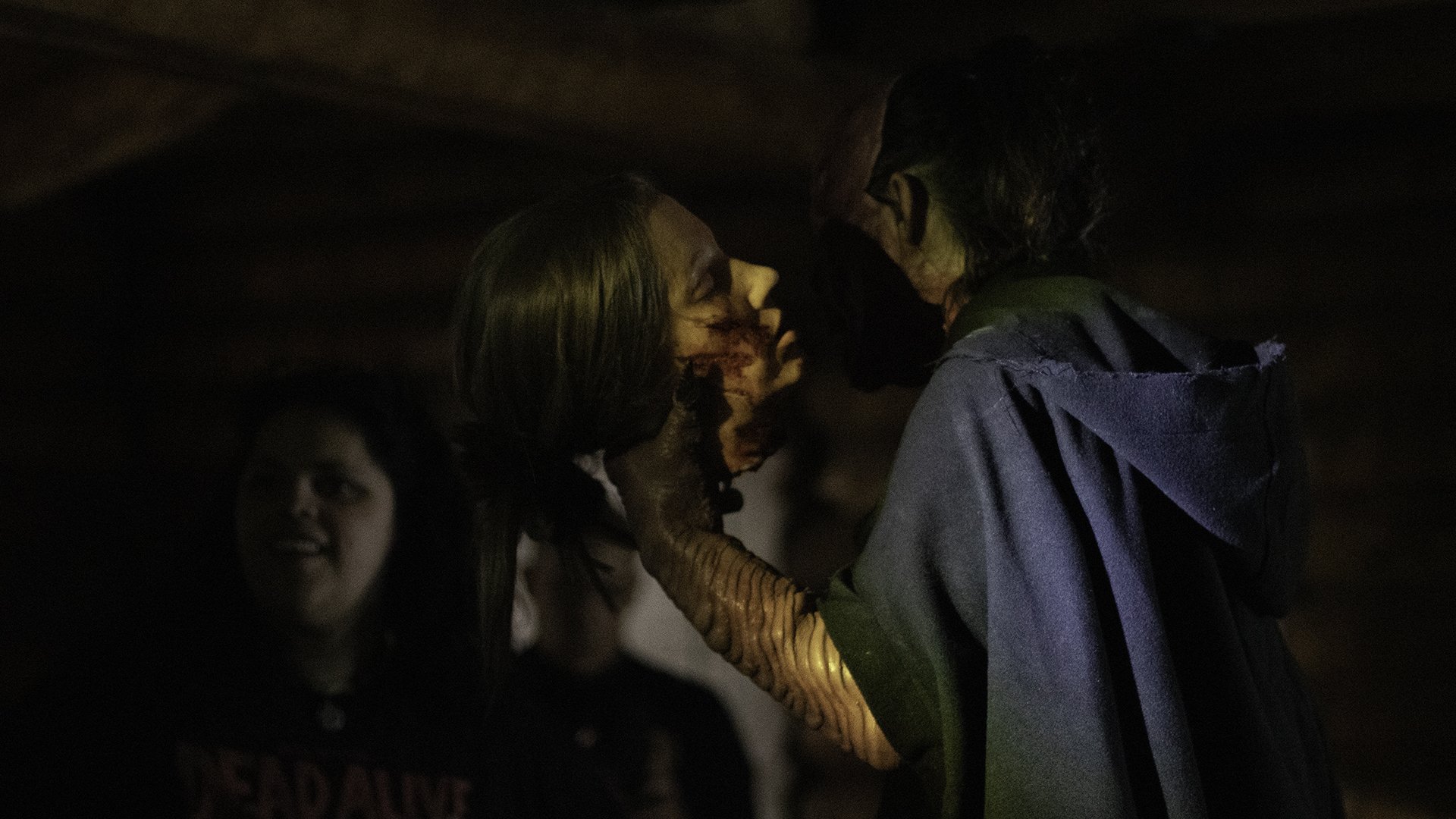
A behind-the-scenes look at how low-key lighting and practical effects were combined on The Fetus to create an unsettling, intimate moment without relying on heavy visual effects.
Horror-comedy lives or dies by tone.
In The Fetus, every lighting choice, color decision, and production design detail was made to balance tension and humor without letting either collapse the other.
Lean too far into comedy and the horror loses its bite. Push the horror too hard and the comedy feels inappropriate or accidental. The balance isn’t found in the script alone. It’s built visually, moment by moment, through lighting, color, and mood.
If you want your horror-comedy to feel unsettling one moment and darkly humorous the next, it all comes down to how you shape light, color, and mood. In The Fetus, every shadow and highlight was chosen to support that exact emotional swing.
This wasn’t about making the film look “cool.” It was about making the tone legible.
Horror and Comedy Share the Same Toolset
One of the biggest misconceptions about horror-comedy is that comedy needs brightness and horror needs darkness. In practice, both genres rely on the same visual tools. Contrast. Timing. Restraint.
Comedy works best when the world feels grounded enough that the absurdity has something to push against. Horror works best when the world feels believable enough that the threat feels real.
That meant our lighting and color choices had to do double duty. They needed to support fear without undercutting humor, and allow humor to land without dissolving tension.
Lighting as a Tone Regulator
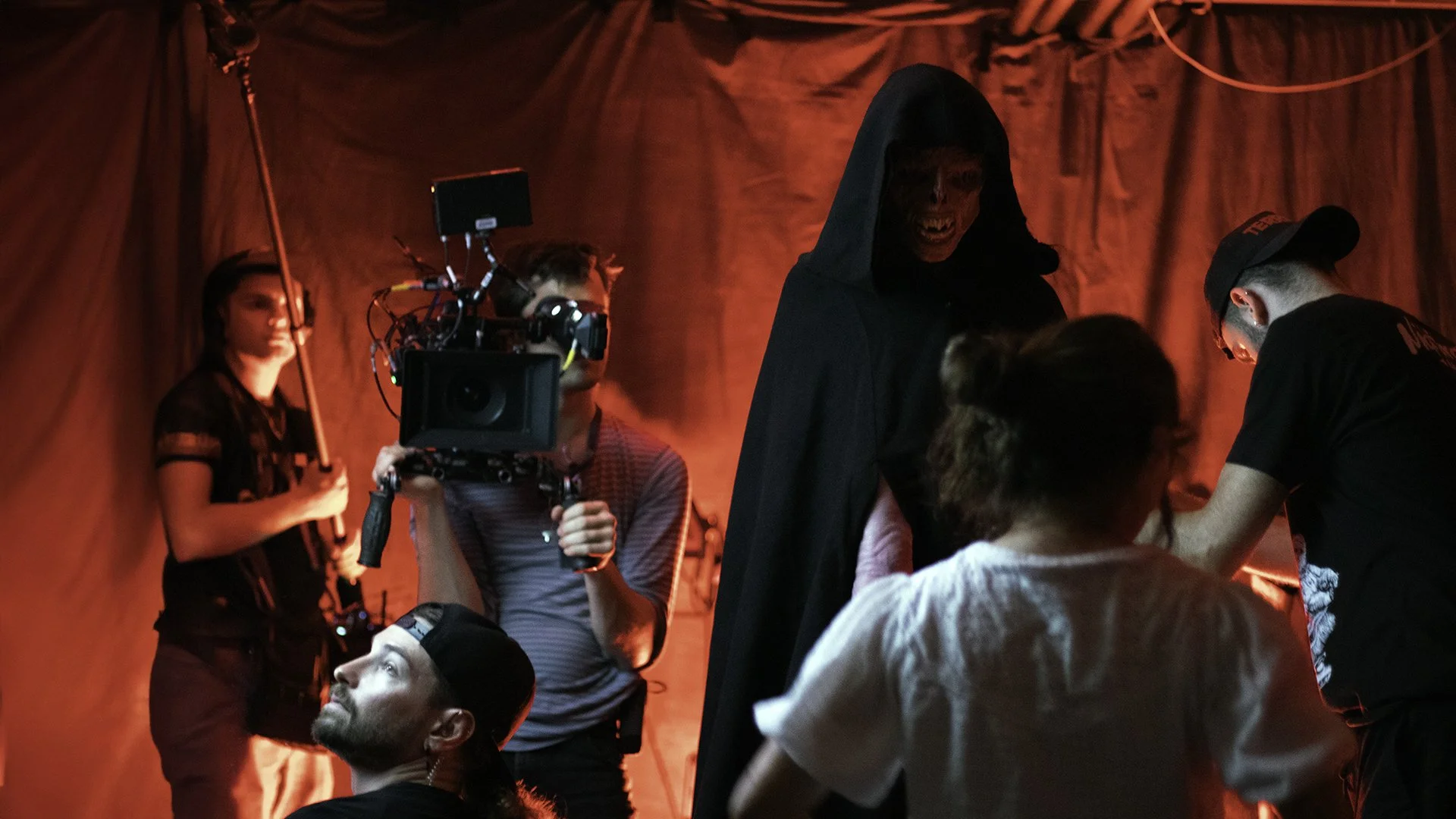
Behind the scenes on The Fetus as the crew lights and films a practical effects creature, using warm, oppressive tones to heighten tension and control mood during a key scene.
Lighting was never about realism alone. It was about emotional intention.
In scenes where the horror needed to dominate, we leaned into deeper shadows, motivated light sources, and a sense of isolation within the frame. Darkness wasn’t just absence of light. It was a pressure that closed in on characters.
In moments where comedy surfaced, the lighting often stayed the same. What changed was how long we held on it.
Letting a beat linger just a second longer than expected can turn discomfort into humor. Cutting too fast can rob a joke of oxygen. Lighting sets the emotional baseline, but timing decides how the audience interprets it.
Color as Emotional Subtext
Color was treated as subtext, not decoration.
We avoided overly stylized palettes that would tip the film into parody. Instead, production design and cinematography worked together to create environments that felt lived-in and slightly off.
Warm tones often signaled familiarity and false safety.
Cooler tones crept in as scenes became more threatening. Blood, gore, and practical effects were allowed to be saturated because they needed to shock against an otherwise restrained palette.
Comedy doesn’t come from bright colors. It comes from contrast. A grotesque image framed in a visually serious world is funnier than the same image presented as a joke.
Production Design Grounds the Absurd
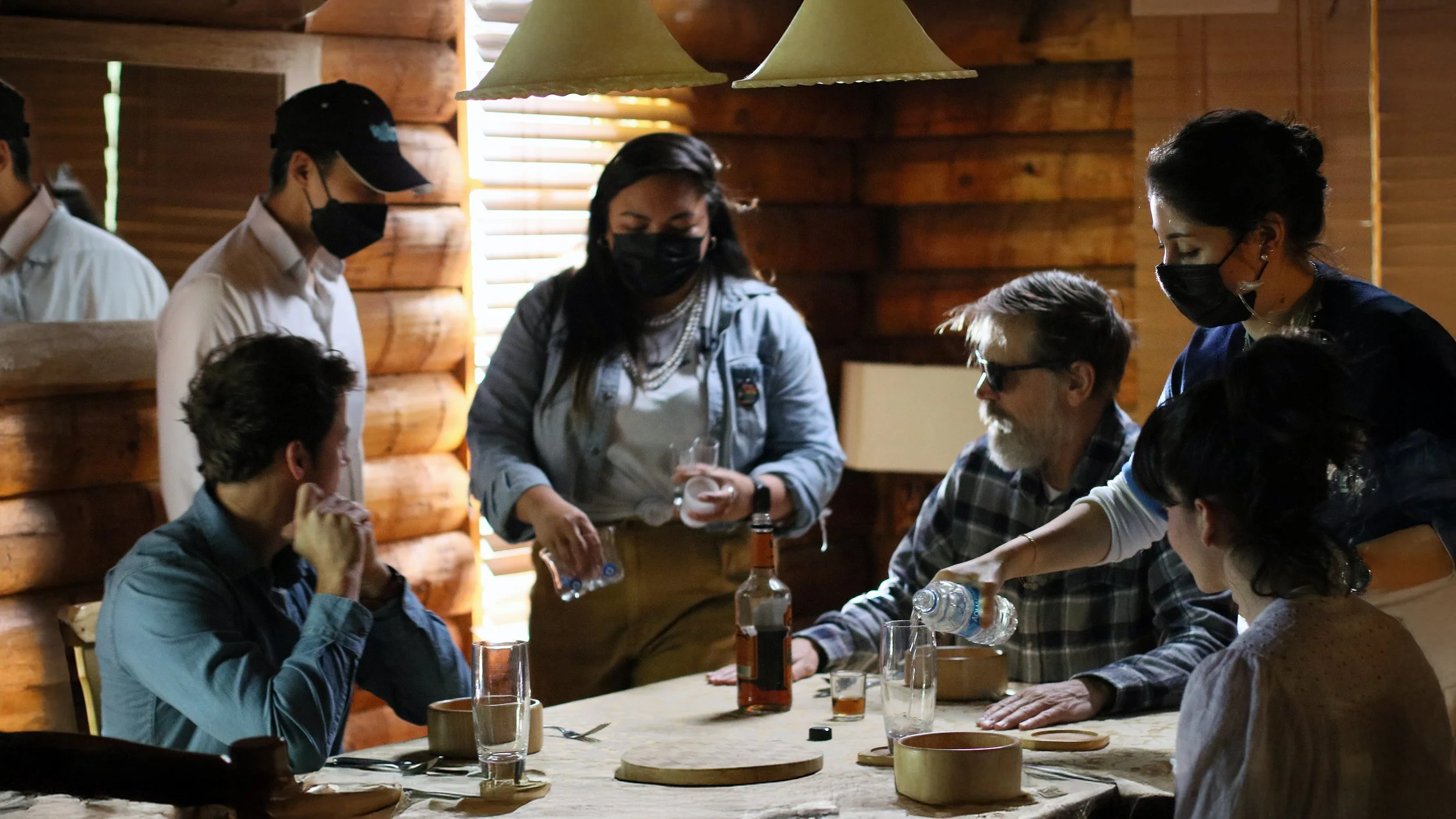
Behind the scenes on The Fetus, production designer Jaclyn Amor and art department member Yasemin Bilgen shape the film’s tone through hands-on set detail.
Jaclyn Amor, who served as production designer, did a lot of quiet heavy lifting.
She chose locations and dressed each set to feel believable first. Cabins looked like real cabins. Apartments felt occupied, not staged. The more grounded the environment, the more freedom we had to push the horror and the comedy without losing credibility.
Props, textures, and set dressing helped control tone in ways dialogue never could. A mundane object placed in the wrong context can be unsettling. That same object, held just a beat too long, can become funny.
The audience doesn’t consciously register these choices, but they feel them.
When Practical Effects Meet Lighting
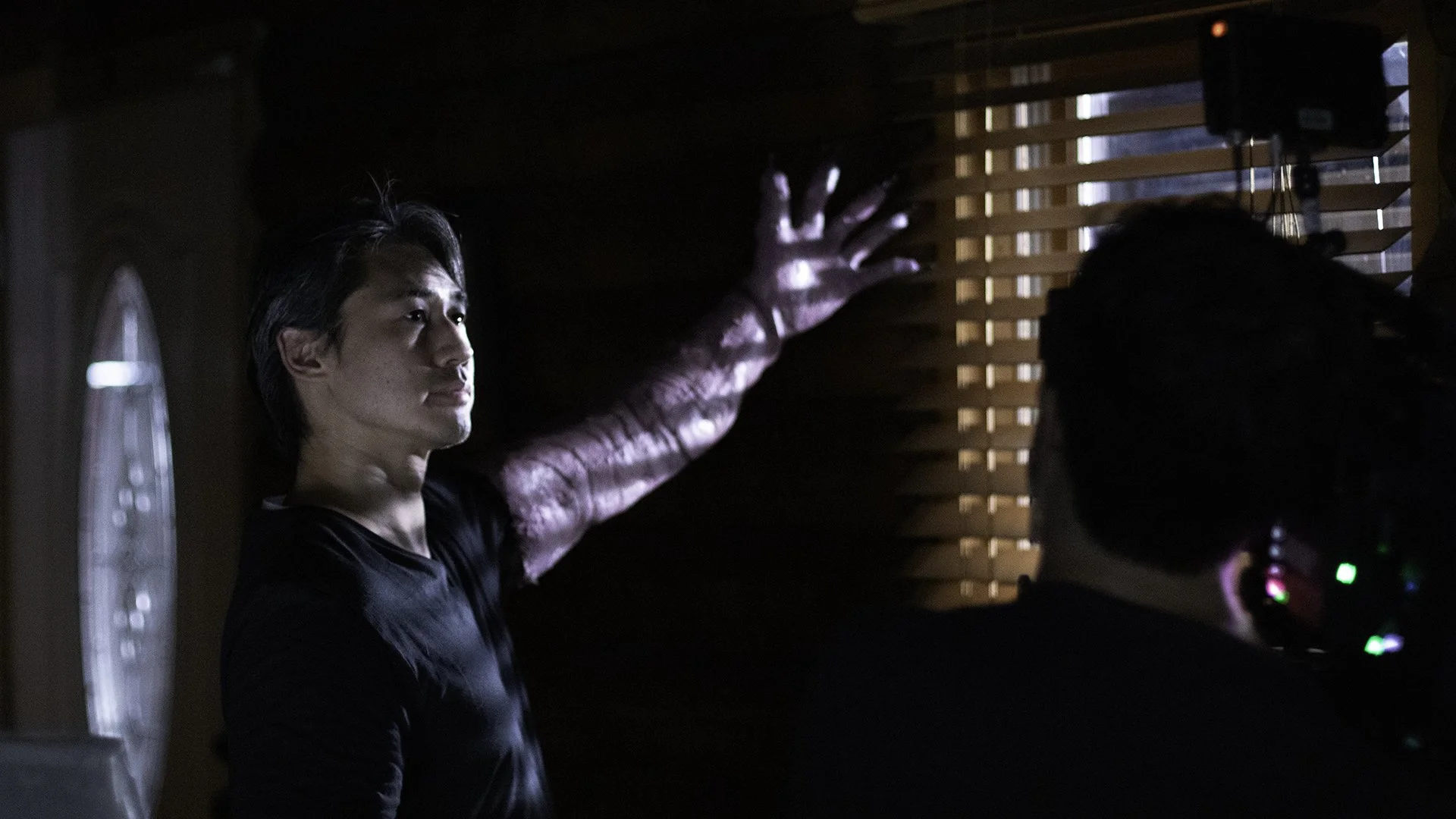
Writer-director Joe Lam wore a demon glove in a shot that required low-key lighting and controlled shadows on The Fetus, allowing mood and tension to emerge naturally without overexposing the illusion.
Practical effects only work if the lighting respects them.
We designed lighting setups that showcased texture without revealing seams. During the film’s climax, lights throughout the cabin burst due to a demon’s scream, which allowed us to create even more shadows to hide imperfections in the creature’s form.
This was especially important for horror-comedy. If an effect looks fake, it kills the scare. If it looks too grotesque without relief, it can overwhelm the humor.
Lighting allowed us to modulate that line scene by scene.
Tone Is a Conversation, Not a Rulebook
One of the biggest lessons from The Fetus is that tone isn’t something you lock in during pre-production and forget about. It’s a conversation between departments, and it continues all the way through post.
Cinematography informs production design. Production design informs performance. Performance informs editing. Editing reshapes tone again.
The goal was never perfection. It was coherence.
Lighting Checklist for Horror-Comedy
Use one motivated key light
Limit fill to increase tension
Add warm accents for false comfort
Accent shadows on practical effects
Reserve bright whites for comedic beats
Final Thoughts
Horror-comedy isn’t about splitting the difference between two genres. It’s about letting them coexist in the same frame without canceling each other out.
Lighting, color, and mood are the invisible glue that makes that possible.
If you’re making a horror-comedy, don’t ask whether a scene should be scary or funny. Ask what the audience should feel first, and how long you can hold them there before you let it break.
That’s where tone lives.
👁 Haven’t seen the film yet?
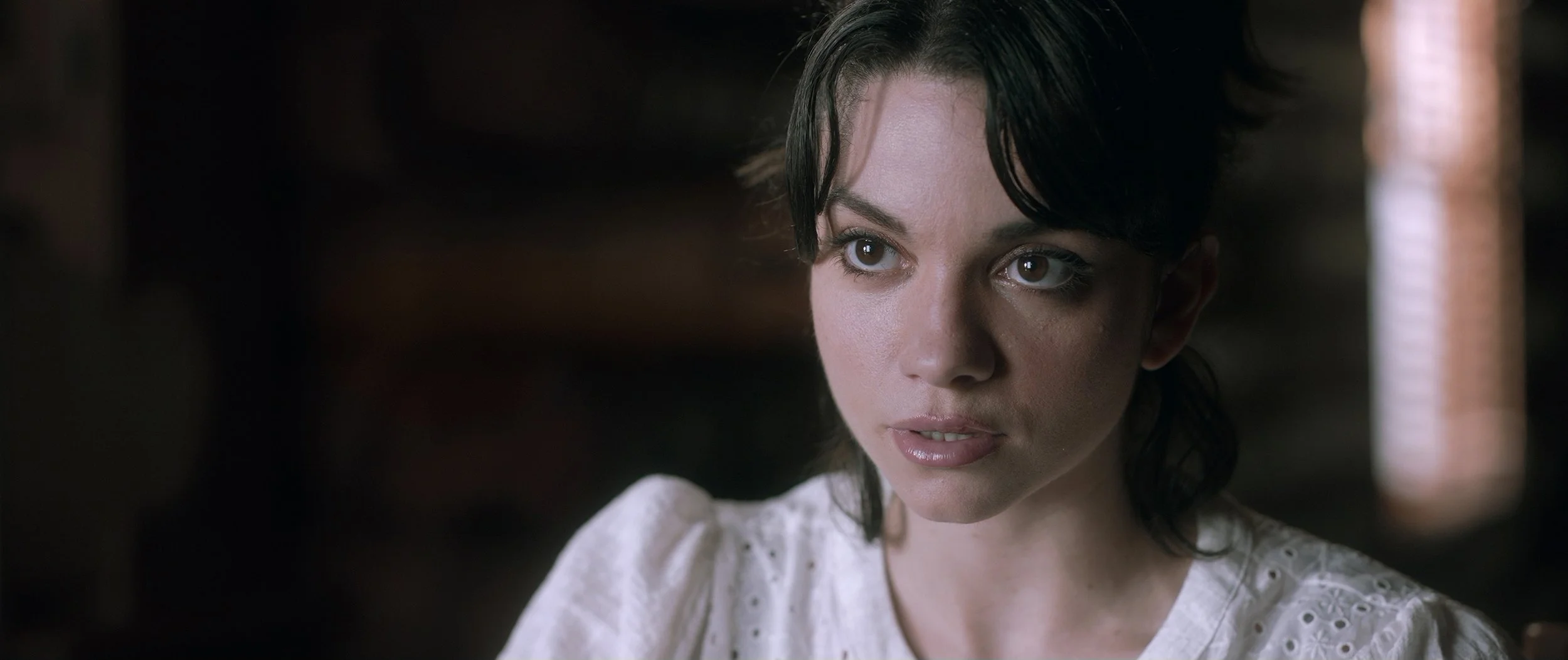
Watch The Fetus starring Lauren LaVera now.
See how it all comes together on screen, watch The Fetus.
👉 Want a free copy of our behind-the-scenes filmmaking book?
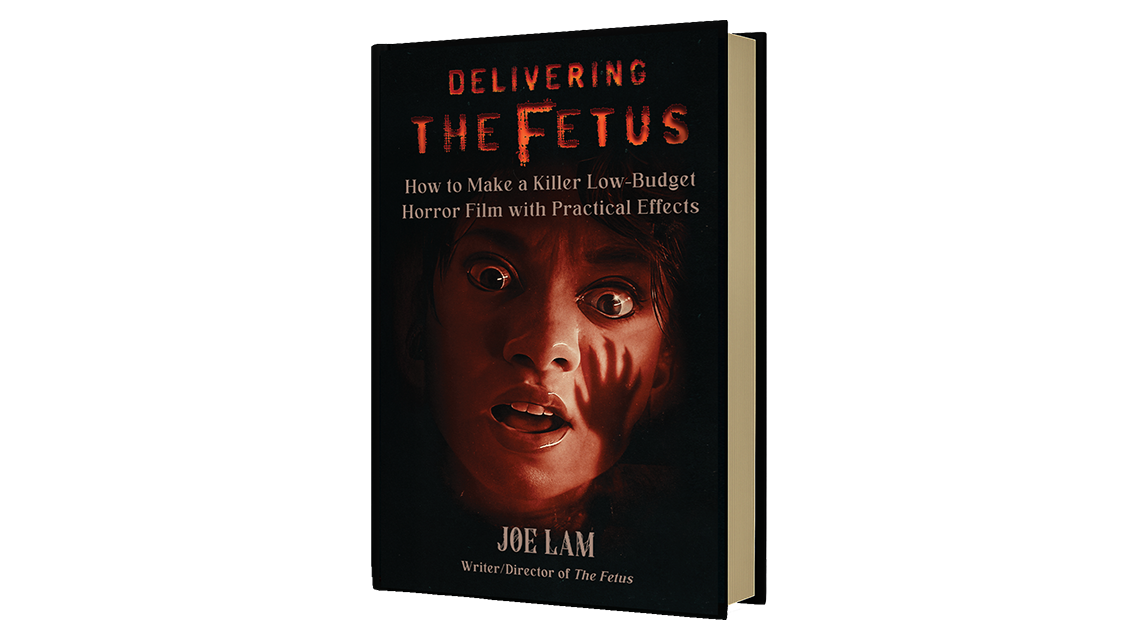
Free filmmaking book by Joe Lam, writer/director of The Fetus, offering step-by-step insights into low-budget horror and practical effects.
Go behind the scenes of The Fetus and dive into the practical FX, creature builds, and filmmaking chaos that brought this monster to life. Essential reading for indie filmmakers and horror fans who want a deeper look into the nightmare behind the movie.